Mano de Orula
What is Mano de Orula?
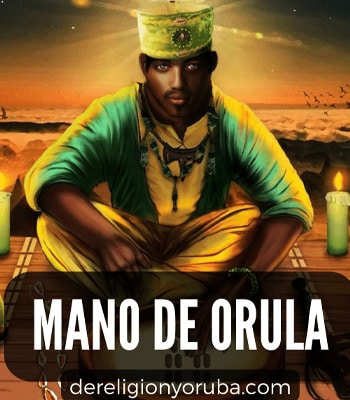
The Mano de Orula (Hand of Orula) is a ceremony carried out over three days, although some houses complete it in two, omitting the middle day, which serves only as a day of rest for the Awo and for praying over the heads of the initiates. During this initiatory ceremony a series of events takes place in which great secrets are revealed to the person undergoing the initiation. The ceremony is known by this name through Spanish adaptation, but in strict Yoruba it is called «Awofaka» for the men who receive it and «Ikofá fun» for the women. Women who receive the Mano de Orula go through a variant of the ceremony, different from that of the men. They are consecrated and recognized as «Apetebi», meaning «wife of Orula», which grants them the authority to attend to him and look after his well-being, the cleanliness and care of his receptacle, and also to offer him the various foods or adimuses that this orisha enjoys, to cook for Him, and other duties that will be explained further on.
Whoever lives in accordance with their destiny, strives to be the best they can be, and fulfills the sacrifices will find happiness. If you came into this world to be a farmer, work to bring in the best harvest, but do not try to be a banker, for you will be a sad caricature of yourself. Orunmila is received out of faith, out of belief in him, to respect him and attend to him.
Who is Orula?
Orula is the divinity of divination and wisdom in the pantheon of the Yoruba religion. He is the witness of God (Olodumare) from the moment He conceived and built the universe. Orula therefore knows the destiny of all things and all living beings: how they came to be, how they are, and how they will end. By receiving or consulting Orula, people can come to know their destiny, both in the physical world and in the spiritual one, learn which difficulties threaten them, and how to free themselves from them through sacrifices, among many other things.
Names of Orula: Orunmila, Orula, Orunla, Ifa, Eleri ikpin Ode.
The necklace and the Ide of Orula are green and yellow, and they must be placed only by a priest of Ifá. They represent the pact Orula made with Death, so that Death would not touch his children until Orula rules that their destiny on earth has come to an end. If the Ide or necklace (Ileke) breaks, the person must call their godfather in Ifá immediately, for they are in danger of death. The day of Orula is October 4th, for which one should bring two coconuts, a yam, two candles, a derecho (ritual fee), and any gift of fruit, cakes, or food the person sees fit, to the house of their godfather in Ifá.
The consecration ceremony of Mano de Orula
FIRST DAY OF THE CEREMONY (THE WASHING)
On the first day, the babalawo who is handing down or «birthing the ceremony», together with at least two more babalawos, will pay their respects and feed the dead of those aspiring to the Mano de Orula. They will consecrate the Saints that are being born, receive their future godchildren, and feed those Saints the animals that, by tradition, are offered to each of them. Thus ends the first day of the ceremony.
SECOND DAY (THE MIDDLE DAY)
On the second day, the initiates must go to the house of the godfather babalawo to refresh their heads by means of «cobori eleda», or, as this ceremony is commonly known, the rogación de cabeza (prayer over the head). They then return home and are advised to rest while awaiting the next day of the ceremony. In some houses of Ifá, since this is essentially a day of rest, this day is omitted and the head prayer is performed very early on the morning of the third day, leaving only two days of consecration.
THIRD DAY (ITÁ)
The third day begins with a ceremony to Olodumare and the departed in the courtyard of the house, facing the sun (this ceremony will be explained in future writings). Breakfast follows, and then the itá, which is the divination of one’s destiny referred to earlier in this text. Itá means «sentence and destiny», and in this ceremony the destiny we chose when we knelt before Olodumare is revealed. Our Guardian Angel is revealed to us, and the babalawos, through Orunmila, give us the best counsel for living our lives and reveal the ebbós (sacrifices) we must offer to the orishas to improve our path on Earth. They warn us of the hardships of life that each person may suffer and of the good fortune that could come to bless us through the orishas. When the itá is finished, the babalawo proceeds to hand over the Saints to those who are now his godchildren and to place upon them the necklace and bracelet in the colors belonging to Orunmila, which may be green and yellow or green and brown, thus concluding this beautiful ceremony.
THE WARRIORS RECEIVED IN THE MANO DE ORULA CEREMONY
Remember that Orunmila knows what is inside your heart. Orunmila will grant you what lies within his reach and according to the sacrifice you have made. This must be said because bad religious practitioners offer mirages and deceptions of economic enrichment to people. Receiving Orunmila and the orishas means having someone to lean on when the world seems to be falling down on us, and someone to thank when life brings us joyful moments. With Orunmila you will never be alone. Attend to him, speak to him from the heart, and he will always come to your aid.
ELEGGUÁ
He is the King of the roads, sent by Olofin to see that His word and commands are fulfilled. He is the first Saint to be attended, for he is the messenger and trusted Saint of Orula. When the world was created, God created 200 Favored Divinities, and Elegguá came with them as the 201st Divinity. All the other divinities arrived with the instruments God gave them, except Elegguá, who is an independent phenomenon.
Elegguá is attended on Mondays, that being the First Day of Work, since we need his ashé (blessing), in the following way: a white candle is set out, aguardiente is blown over him, and he may be given offerings of guavas, sardines, coconut, corn, aguardiente, smoked jutía and smoked fish, cakes, and coffee.
OGÚN
God of War and Iron. A blacksmith, he represents the tireless worker. Because of problems living among others he withdrew to the wilderness and did nothing but work without rest. Little by little he became a hermit, a social outcast, and from this his violence was born. He withdrew to the wilderness to escape the troubles that weighed on him; later, when his skill with iron became known in his village, he was deified. As he lives together with Elegguá, he shares the same candle, and aguardiente and tobacco are blown over him. His tools are rubbed or oiled with palm oil (manteca de corojo). This Saint may be offered aguardiente, palm oil, watermelon, sugar cane, and pineapple.
OCHOSI
God of Justice and of the Hunt. He accidentally caused his mother’s death and, as a consequence, became the God of Justice, hunting down and seeking out fugitives from the Law. From this comes the proverb: «La Justicia es Ciega» Justice is blind — and he does not forgive injustice. Ochosi lives together with Oggún in his cauldron, a union owed to Ochosi’s inability to butcher the animals he hunted; Oggún gave him an iron knife and they immediately became inseparable friends. For this reason, whatever is offered to Oggún is automatically received by Ochosi, and vice versa, because «En la Unión está La Fuerza» In unity there is strength. Ochosi is attended in the same manner as the previous Warriors, and he is offered anise liqueur and birdseed.
OZUN
The Staff of Life. He represents constancy and temperance in the face of life’s adversities. He is a Saint who represents the spiritual side of each one of us, and for this reason he must always stand upright. If he should fall, he is warning of something bad, and one must immediately consult at the feet of Orula and pray over the head. «El Gallo duerme de Pie» The rooster sleeps standing up. To attend to this orisha, from time to time he may be anointed with cocoa butter and cascarilla. A bunch of grapes is also placed for him.
Offerings after receiving Mano de Orula
ELEGGUÁ
As always, offerings are placed for him first. A glass of fresh drinking water, the same we people drink. A glass of aguardiente or rum. A newly lit cigar in its ashtray. A glass of black coffee with no sugar or anything else. A few candies, sweets, and a good piece of chocolate. In addition, Elegguá’s vessel should hold some small toys, such as a spinning top, a yo-yo, a whistle, one or two little toy cars, one or two small balloons, and a garabato (hooked staff).
OCHOSI AND OGGÚN
Three glasses of fresh drinking water, the same we people drink. Two glasses of aguardiente or rum and another glass of anise (bottled), which is Ochosi’s favorite drink. Three newly lit cigars in the same ashtray as Elegguá’s, since they all stand close together. Three glasses of black coffee with no sugar or anything else. Six assorted fruits may be set out, two for each, though this is not obligatory. Everything is set out in threes because the Osun also eats and drinks with the small cauldron. With Elegguá, the Warriors are four.
OSUN (THE LITTLE ROOSTER)
The same as for Ochosi and Oggún. When the cleaning and attending of these four Warriors is finished, a candle is lit and placed before the small cauldron and Elegguá until it burns down. Remember that Elegguá is cleaned and given his offering first, and only when he is done does one continue with the small cauldron and the Osun (who partakes of everything set out for Oggún and Ochosi, which is why nothing is set out for Osun alone). Never attend to another before our opener of roads, for he may take offense and close them. This is fundamental.
ORULA
The Wise Diviner. He represents the wisdom of old age and is the highest exponent of the precepts of Ifá. His principal mission is to bring forth good in as many human beings as possible through Ifá and his counsel. It is believed that Orula was present when each one of us chose our destiny on earth before being born, and for that reason he knows our present, past, and future. «La Palabra de Orula nunca cae al piso» The word of Orula never falls to the ground. Orula was the only deity who made a pact with Ikú (Death) so that she would respect his children (the Idé and necklace of Orula).
A patakí (story) follows, because Orula is the only Saint with the authority to determine each person’s Guardian Angel:
In a land where all the Saints lived and Obatalá was the Governor, the other Saints turned against him, because in that land every Saint determined the Guardian Angel with cowries, each Saint with his own set, and so time went by. One day Shangó began to notice that there were more children of Obatalá than of the other Saints. Shangó gathered the other Saints and told them what he was thinking, and they agreed with him. They immediately resolved to go to Obatalá’s house, and when they arrived, he came out and asked what was happening. Shangó stepped forward and said: «Mire Padre mío, nosotros queremos saber porque cuando Ud. Consulta a un Aleyo y determina El Ángel de La Guarda no salimos nosotros Dueños de ninguna Cabeza?». Obatalá answered: «Lo que pasa es que en mi casa yo lo determino así». Shangó said: «Padre eso no es legal, vamos a casa de Orula para que nos diga cómo resolver este problema». Obatalá said: «Uds. tienen razón porque Orula NO HACE SANTOS NI ES ÁNGEL DE LA GUARDA DE NINGUNA PERSONA y es el único Santo imparcial y así como Uds. desconfían de mi yo desconfío de Uds. por eso mientras exista el mundo Orula determinará El Ángel de La Guarda de cada persona». TO IBAN ESHU.
NOTE: For this reason the Guardian Angel must not be determined with the cowries, for Orula is the one empowered to do so, and since he is no one’s Guardian Angel, he is impartial and just when bringing out a person’s Guardian Angel.
Orula does not give us material riches; he gives us an Oddun by which to reach a better life. «CUANDO EL SOL CAE TODOS GRITAN: «ES LA MUERTE!!», PERO IFÁ LES RESPONDE «NO SE ASUSTEN ES SOLO LA NOCHE QUE LLEGA EL, SOL NO MUERE» When the sun sets everyone cries out: «It is death!» — but Ifá answers them: «Do not be afraid, it is only the night arriving; the sun does not die.»
The greeting to Orunmila
ORULA
ORULA IBORU, ORULA IBOYA, ORULA IBOSHESHÉ
THE GREETING TO YOUR GODFATHER
OLUO IBORU, OLUO IBOYA, OLUO IBOSHESHÉ
THE GREETING TO YOUR OYUGBONA
OYUGBONA IBORU, OYUGBONA IBOYA, OYUGBONA IBOSHESHÉ». The greeting to all babalawos is: «AWO IBORU, AWO IBOYA, AWO IBOSHESHÉ
Where to place Orula in our homes
A place of importance in the home should be found, where his presence can be felt but where he cannot be touched or offended. He may not be kept in bedrooms, bathrooms, kitchens, or anywhere a king should not be.
How Orula is attended
He is attended every 25 days, for which the person must be clean — meaning no sexual relations for at least the previous 24 hours, not menstruating, no alcohol or drugs, not in a bad temper, and so on. Orula is placed on a mat covered with a white cloth, two candles are lit at his sides, a little honey is placed in the right hand and palm oil in the left; the head is bowed, Orula (the Ikines) is taken up, the moyugba is recited to him, and then this prayer:
ORUNMILA ALA KUALOSIÑA ONAWE ODUDUWA
AKUANI EBORA, EYILE MERIWE,
FOBATI FOBAYE FOBAKUE
ELERI IKPIN ODE
AMAMO QUE FI EDENO
KI KU MAKUA, KIARON MAWE MIRE
KIOFO KOTE WEYO BABA OWADI ASHE.
One prays to him, breathing one’s breath over him and asking with humility.
Note: offerings, fruit, or flowers may also be set out for him, or whatever the Oluwo indicates through a consultation before Orunla approximately every 25 days, which is considered the appropriate interval.
WHAT A BABALAWO IS: father of the secrets, which is the literal translation from the Yoruba. HE IS A PRIEST OF IFÁ (OF ORUNLA) ON EARTH WHO HAS PASSED THROUGH THE CONSECRATION CEREMONY OF IFÁ AND WHO DOES NOT HAVE HIS GUARDIAN ANGEL ENTHRONED UPON HIS HEAD.
WHAT AN OLUWO IS: senior babalawo, which is the literal translation from the Yoruba.
HE IS ALL OF THE ABOVE BUT HAS RECEIVED HIS GUARDIAN ANGEL UPON HIS HEAD.
ANOTHER NAME USED: AWO, PRIEST.
How a Babalawo, Oluwo, or Awo is greeted:
If he is your godfather: Oluwo Iboru, Oluwo Iboyá, Oluwo Ibosheshe.
If he is your Oyugbona: Oyugbona Iboru, Oyugbona Iboyá, Oyugbona Ibosheshe.
If he is any other: Awo Iboru, Awo Iboyá, Awo Ibosheshe.
Women, upon receiving the Mano de Orula, become Apetevi of Orunmila, which means they are his wives. And the greeting the babalawos or Awoses give them is:
Apetevi Iboru, Apetevi Iboyá, Apetevi Ibosheshe.
The responsibility they take on is to be attentive to any ceremony of Ifá their godparents may hold, so as to place themselves at their service and help in the ceremony.
What happens after the Mano de Orula ceremony
As is the custom in our house of Ifá, the person is given a notebook with all the recommendations Orula gave in the itá, the reading of one’s destiny. It records in detail the sacrifices (eboses) or additional ceremonies the person is to carry out, which should be performed as soon as possible so that the positive in the signs that came out may be fulfilled and the negative may be driven away as quickly as possible. This is extremely important, for one should not think that having received Orula and the Warriors means everything will now go well; it does not work that way. This religion consists of constant consultations, ceremonies, and sacrifices, so that our life on earth may be as happy as possible. Therefore, ask your godfather what you must do to resolve what Orula indicated.
If, one day, the person decides to be initiated into the worship of the Rule of Osha (Santería), they will be initiated into the secrets of their Guardian Angel, the one revealed to them by their godfather babalawo in their Mano de Orula ceremony. To alter this fact — to seek one’s Angel through the oracle of the cowries, through the eggun, or to deliberately try to change the Guardian Angel and be initiated into another deity to whom one’s head does not belong — will unleash a series of fatal events for the person.
Mano de Orula for women
WHY ARE THE IKINES HANDED OVER COMPLETE, AND NOT JUST ONE OR TWO?
Ikofá. The ikofá, or Mano de Orula for women, is the highest ceremony a woman holds in Ifá, understanding that Ifá embraces the whole of the Yoruba religion as practiced in Nigeria, the cradle of our belief and faith. Once the ikofá is received, the woman becomes Apetevi of Orunmila, which is an important position and carries both responsibilities and rights. There is a practice in the Americas of handing over only 1 or 2 Ikines (seeds of the African palm) on the part of the priests of Ifá, or babalawos.
There is no valid reason, nor any Odun (sign of Ifá), that explains this.
In Nigeria the complete hand of Ikines is handed over, which is 19 or 20, and in some cases even 21, as with Ayafa.
THE LOGIC OF THIS IS:
1. Ifá speaks through the 16 basic Olodus.
2. There is no impediment or odu that limits women.
3. It is not logical for the babalawo to use the hand with which he himself was born in Ifá, combined with the 2 Ikines that are washed in the Bodun ceremony, to obtain the sign of Ifá for the woman. This practice is likewise explained nowhere.
4. The ikofá can and should speak whenever the woman requires it — for example, before an important decision in life, when one wishes to set aside the use of the Okpele or Ekuele. Nor is it logical, as many claim, that the ikofá and the awofaka (the Mano de Orula of the man) speak only once. This too appears in no odu of Ifá.
The role of the Apetebí of Orula
An Apetebí of Orula is any woman who reaches ikofá. When Orula fell ill, only they cared for him and healed him, and for this reason he designated them as the only ones authorized to attend to him and to set out his attributes and offerings. The blessings an Apetebí receives from the hands of Orula are comparable to those of a babalawo. The ikofá of Orula can eat she-goat, and itá can be performed if necessary (for any of these ceremonies she must count on her godfather babalawo). The Apetebí cannot become a babalawo, which is why the ikofá ceremonies differ from the awofaka ceremony, and the secret of Orula given to women (ikofá) is different from that given to men (awofaka). The awofaka of Orula is a hand of Orula given to men, and in this case the man may continue advancing until becoming a babalawo (depending on the Oddun [sign]) if necessary, and it is then that he will enjoy all the privileges of Ifá. It is important to mention that none of these deities exist to do harm, nor to bring lucrative profit to whoever possesses them; only through Ifá will we have guidance and know how to reach them.