Obatalá
8.142 words 39 min read
Who is Obatalá?
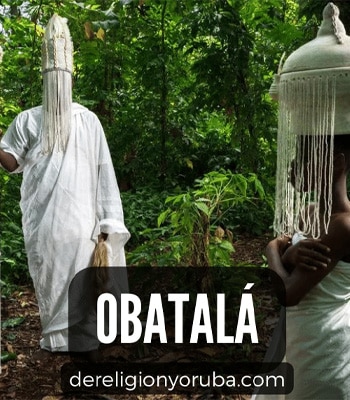
Obatalá is the orisha of creation and the owner of all heads. His name is formed from the words Obbá — King, Ta — To shine over, Nla — Great, which together mean «King who shines over all things«. It is said that he was the one who sculpted the form of man in the vagina of women. He is one of the most ancient orishas, and he is said to have as many avatars as Oduduwa, divided into feminine and masculine aspects. The most ancient of all the Obatalá are the first married couple, formed by Oshalufon and Orisha Aye.
He is merciful and a lover of harmony and peace. He commands good conduct and is the only one able to calm his children, serving as intermediary and imposing restraint when there is guerra de santo (a war between santos). He holds authority over all the orishas, who obey and respect him. He is the only orisha who speaks in every sign of the diloggun, in every oddun, from 1 to 16, no matter which santo the iguaro has crowned. This orisha must always remain lying down so that peace may reign in one’s life and home.
He is also the god of the home, and he is petitioned when one wishes to obtain a house of one’s own. He does not allow anyone to undress in his presence, nor harsh, obscene or insulting words to be spoken. He demands respect from everyone. The castle that belongs to him has 16 windows. Owner of silver and of all white metals, his attributes must be crafted in those metals. He is the orisha who created the earth and sculpted the human being. He is the pure deity par excellence, owner of everything white, of the head, of thoughts and of dreams. A lover of peace and harmony, he governs good conduct and is able to appease his sons Shangó and Oggún Areré. All the orishas respect him and seek him out as their advocate. His children must be deeply respectful.
He has 24 paths. The castle that belongs to him has 16 windows, and his priests are called Oshabí. The children of Obatalá may not eat crab or beans, nor drink alcohol.
Obatalá speaks in many oddun of Ifá, but his descent to earth took place in the oddun Baba Eyiogbe, although the construction of heads in their bone formation belongs to the oddun Ogunda Meyi and Ogbe Yono, which are governed by Ayala, the Obatalá charged by Olofin with building human heads. That is why, when there is a war between santos over the possession of a head, Obatalá is crowned, so that he may quiet every war being waged over that leri, for all owe him obedience as the owner of the world.
In his most ancient stages, Obatalá Brumú appears as an androgynous being, father-mother, origin of everything that dwells upon the earth, and in later stages as a masculine or feminine entity. This creative work takes shape in association with Yemayá Olokum, sovereign of the oceans. Obatalá is a notable and respected god within the Yoruba religion. In the hierarchy of the orishas, he is the one who holds the highest authority, and he personifies the creation of man as ordered by Oloddumare.
Obatalá is the only one who knows the road that leads to the dwelling of Oloddumare. He is the owner of our feelings, dreams and thoughts. He was sent by his father to do good and to rule as king of the planet. He is a humble and wise orisha. Despite holding so much power, he never imposes himself or tries to stand out. He is very quiet, calm and protective. His nature embodies reason and justice. The purity and natural splendor of his being cannot be described in words or songs. When he makes himself present, he fills the believer’s heart with peace, joy and a deep, serene gladness.
General characteristics of Obatalá
- Symbol: Scepter of command
- Syncretism: Our Lady of Mercy, the crucified Jesus, Saint Joseph the Worker, Saint Eduvigis, Saint Alexius, the Nazarene, Saint Lucy.
- Number: 8 and all its multiples
- Color: White
- Day: Thursday, Sunday, and the 8th, 16th and 24th of each month.
- Feast day: September 24
- Parents: Olofi and Oloddumare
Animals he eats
- Doves
- she-goat
- guinea hen and white hen.
Herbs
White lily, white amaranth, Peregún, Egüé Teté, cotton, water flower, curly amaranth, purslane, almond, white canutillo, Campana, Egüere Egún, Mata de pincho, prodigiosa, white elder, peony, basil, corazón de paloma, sugar apple, soursop, mint, lemon balm, marjoram.
Sopera
A white sopera (lidded tureen) holding 4 stones, tools and some of his attributes. His stones must never be exposed to sun, wind or the night dew.
Attributes
Owner of silver and the white metals. He has a crown with 16 parrot feathers (although 4 or 8 are usually used). He carries a sun and a moon, two bracelets which may also be 4, 8 or 16, a serpent (all of this in white metal), a silver hand grasping a scepter, 2 ivory eggs, 8 or 16 okotós, cocoa butter, cascarilla (eggshell chalk) and cotton. The tambourine belongs to him. He carries a white flag and is the owner of Iroko. His fleece is his cotton, and a branch of it must lie on his mat for the kari Ocha of his iyawó. He has a silver bell.
Tools
Staff of command, bracelet, sun, moon, serpent, scepter and a white iruké.
Necklaces
His eleke (ritual necklace) is white, with beads of the characteristic color inserted according to each path.
Illnesses associated with him
Blindness, paralysis, dementia.
Offerings
White rice, rice pudding without cinnamon, a meringue tower decorated with silver dragées, white milk custard, 4 liters of milk in cups on white plates, cocoa butter, white pumpkins, champola and 16 sugar apples, grainy or mealy fruits such as soursop, pomegranate, sapote, birdseed and other grains. Snails and cowries, balls of ñame and otoe, balls of cocoa butter and cascarilla and, in general, any white, unsalted food, and the cotton flower.
Prayers
OBATALÁ OKERIN ATI ABINRINI LAIYÉ ELEDA NI GBOGBO NA DARADARA ART BURUKI OBA ATI AYABA AFIN OGA NI NA TALA ATI GBOGBO NA CHECHE BABA ALAI YE ALABO MI AT MI GBOGBONA EJUN DARADARA, BABA WA AFIN ALANO KEKUA BADAMI ODUKUE.
Translation
Great Orisha, father-mother, man and woman, creator of the world of all, the good and the bad, King and queen, divine owner of purity and dispenser of all justice. Great protector of the world and of all that dwells within it. Our Father, divine and Merciful. Hail.
Songs
BABA ALAYE O BABA ALYE O BABÁ PE WURÓ OBI EYO ARAYE O OKÚ NI BABA BABA WU OLOWO E E E BABA WU OLOWO E E E BABA ALAYE O BABA ALAYE O BABAPE WURO O BI EYO ALAYÉ O OKUNÍ BAMBA BABA ELERÍ FA ODÚ MILA GBOGBO IWORO BABA ELERI IFÁ
Translation
Father owner of the world, father owner of the world. Father, they called you for your great generosity. He gave life to the joy of the people of the world. May you have long life in safety. Father who pleases venerable men. Father owner of the world, father owner of the world. Father called to gentleness, who gives birth to the happiness of the men of the earth. May your life be long. Father, owner of the favored head; greatness swallows wealth for all who eat of the sacrifice. Father, you who are owner of the favored head.
The paths of Obatalá
Obatalá Orisha Ayé: A female orisha, she carries an elongated shell called okinkonko. This is the mystical aspect in which it is said that the female Obatalá were born in the sea and the males on land. She was the first Obatalá to come out of the sea, and they descended to earth in the sign Baba Eyiogbe. Many santeros consider this orisha a messenger of Oshún. Her tools are the crown and five points, the same as Oshún. Her necklaces are made with egg-yellow beads, strung as follows: 25 beads and, at each gloria bead, one cowrie, up to the number of 5. Her food is doves, in a number of 5.
Obatalá Orishanla or Oshanlá: She is a chilly, trembling little old woman who must be covered with a white sheet. As soon as she descends, she asks for cocoa butter so that a cross may be traced on the palm of her hand and on the head, toward the area where the occipital bone meets the parietals. She also eats a bit of that fat, which is said to clear the intelligence. She is originally from Owó and is very calm. She has long hands to free her children from traps. She sits on a chair. In the Arará land she receives the name Orisasá. Like all the female Obatalá, her stones are kept apart.
Inside her sopera is placed a circle of lead on top of an ayé (an elongated shell). She also carries two moñingas, a narigón (nose ring), a scimitar, 16 snails and, at times, a deaf man’s horn and an Obatalá scepter of white metal. Her necklace carries egg-colored beads and ivory. Because of her nature, no one may raise their voice in front of her. Her room is painted white and perfume is sprinkled in it. In the Arará land she receives the name Lisa. Among her components there is also a bisque doll, which carries a white rosary and a lorgnette.
Once it has been determined that she is Oshanlá, cotton and a parrot feather are placed in her sopera. According to some santeros, she is blind and taught a little girl to read; she weaves and embroiders and has a little chair. Among her attributes she also carries an ivory ball. She is greeted with an embrace, and then the arms are crossed back to back, as if embracing oneself, and one’s head is crossed with the santo’s head twice. She is identified with Our Lady of Mercy and Saint Anne.
Obatalá Igbá Ibo, Ibaíobo, Ibá Ibo Obá Ibo, Obbá Iba, Babá: He is an old Obatalá. He is divine thought, and he is represented with the eye of divine providence, owing to the biblical references to the eye of God. He is the mystery of the güiro that speaks. He does not let himself be seen, and anyone who saw him would remain blind forever. He is the Foddú Daa of the Arará. The Eguadó say he is from their land and that, together with his wife Yemú, he forms the father-and-mother couple from whom all the orishas were born and the world was created. He is the representation of the omnipresent God.
Obatalá Obá Lufón: He is a primitive male Obatalá, equal to the sun and to the Blessed Sacrament. He is syncretized with Emmanuel, or Jesus the Nazarene. It is also said that he is a little old woman who, when she descends, appears deeply wrinkled, small, and trembling with cold. She is covered from head to foot with a clean sheet. All the orishas immediately obey any order from this deity, for by merely raising his right hand and placing it before their faces, they grow calm and promise whatever Obatalá asks.
His dance is very difficult: it is performed deeply crouched, with the hands almost brushing the floor, the spine fully bent, and with a grace and cadence as captivating as it is arduous. According to some, he is from the Lucumí land of Oyó, Yebú and Egwadó. He was the first to speak, and he gave men the word and the right to exercise sex. According to other accounts, this Obatalá is known by the name Alayé Moré.
Although he is originally from Ifón, he became great in Oshokbo. When something is asked of him, it must be asked in reverse. He is given 16 parrot feathers, a silver figure with two heads (one on the shoulders and another over the place of its sex), a quartz stone and a boat. Among the Arará he is known as Tokuno. This Obatalá was the one who invented weaving and needle sewing, so he is also given two silver needles. He invented carpentry and taught it to Ocha Griñán. He is the favorite son of Oddúa, and in the land of Ifá he has a brother named Oloyán Gromuko, who gave him the secrets for loading the horns of Shangó. He was born on the first of September, and his Ozaín is loaded with a bronze head, which symbolizes the head of the orisha in Ifé. His necklace has 24 white beads and 1 coral bead between two crystal beads, repeated until the necklace is complete.
Obatalá Ochá Griñán; Ocha Guiña; Osa Griñán; Osa Kriñan; Sagriñá; Agguiriñá: He is a very old Obbatalá, messenger of Olofi, who used to climb the mountains where Olofi dwells. He is very peaceful and trembles greatly from cold and old age. He comes from the land of Iyesá.
The owl belongs to him — the symbol of intelligence, discretion, wisdom and experience. He is also the one who can see when no one else can. The Ibeyis belong to him: Sálako (male) and Talabí (female). Along this path it is said that he is the guide who leads to the house Olofi keeps on the hill. He is syncretized with the crucified Jesus, Saint Joseph of the Mountain and Saint Sebastian.
He comes hiding from the wind and walks on crutches, but when Obatalá grows angry, he throws down the tools and strikes out with the machete. Some believe he is a son of Oddúa and king of Ogbomoshe and Egigbo. His sopera is divided into three parts: one for his stone, another for his cowries and the other for the tools. The Arará call him Makenu, and he carries three arrows in a quiver covered with Obatalá beads, three parrot feathers inside and eight outside, a staff covered with Obatalá beads, a machete, a sword, a Blessed Sacrament, a twisted bracelet, a Yoreshoro on a horse with one leg raised, a boar’s tusk and a lion’s fang, a billiard ball, ivory, mother-of-pearl and corals.
He is the husband of Oshanlá and walks with Yewá in Aragún, a sign of Ifá. According to belief, it was he who brought order to the world, and to do so he used his son Ojiniyán. He also carries another set of tin tools in the middle of the three divisions of his sopera, a crystal divining ball upon a consecrated Ifá board, and a Mano de Orula (Hand of Orula). Upon his sopera is placed a dagger whose handle is loaded with the Ozaín of Obatalá. He was the one who gave Orula the secret of how to peel the ñame to make the ashé, or yefá.
He works with the lead smelters, forged the spear, and stripped the vulture of the feathers on its head. On the other hand, for some he is a warrior who lives at the foot of the trees, ivy being his favorite plant. For them, he is the father of Shangó, Orula, Agayú and Babashé. He dresses in red and white; his necklace carries nine mother-of-pearl beads and one coral. Another version of his necklace is made with 24 white beads and one red, a cycle repeated until the necklace is finished; when it is closed, a silver crucifix is attached.
If he is the crowning santo, he wears a white metal crown, topped by a hand holding a scroll of the law and adorned with 16 parrot feathers distributed over four arches of the crown, and 16 pieces: a sun, a moon, a spear, a fan, an axe, a face, a feather, an Addá, a star, a Blessed Sacrament, a chameleon, a serpent, a mirror, a chair, a figure and a horse. Finally, petitions to this santo must be made in reverse. On another note, Obatalá Achó, Acholó or Babá Achó is a rarely mentioned man who is syncretized with Saint Joseph of the Mountain. He is young, dances on one foot, and was king of Ibadán.
Obatalá Obá Moró or Obamoró: he is a very old and wise Obatalá, also known as Abipá. He is the king of Ibao, and in Arará they call him Jué Até. His necklace is white and carries ivory, corals and gloria beads. It is made with 16 white beads, 2 agua de jabón beads (a milky soap-water glass bead), 1 purple gloria, 2 agua de jabón and 16 white, and this series continues until the necklace is complete. At the end, a wooden cross is attached. Among his attributes are the symbols of the passion of Jesus, two machetes, a Blessed Sacrament, 2 ladders, an arrow, 2 spears, 2 scourges, a crown of thorns and a crucifix, all in white metals. Outside are placed a clay jar, a lodestone, a moñinga and another hand of cowries.
He carries a small rooster Osún, and as tools, 2 doves and a chalice hanging from a crown of thorns, which is placed upon one of his stones. His messengers are 5 and are called: Alapíni (albinos), Ashipa (lepers), Samí (dwarves) and Chinikú (the crippled). He is also given a Jesus the Nazarene, two porcelain figures, a metal pitchfork and a staff. His children do not receive head rogations with watery fruits, but with dry ones. The load of his Ozaín goes inside a cross of cedar or Jocuma wood, which is placed upon a chalice or sacred ciborium, with pieces of human bones.
When the one who has him seated completes one year of initiation, and not before, they must consecrate the crown of thorns by washing it in a jícara (gourd bowl) with Obatalá’s herbs, erún (a secret placed on the initiate’s head), coconut, kola and aira obi motiwao. It is taken to a cave, and two white roosters and two doves of the same color are brought to Obbá Moró; obí (coconut) is given to the santo, and the roosters are sacrificed to the initiate’s head and to the crown. With the ashé of the jícara, the heads and the hearts of the roosters, an Ozaín is assembled, covered in the hide of the she-goat sacrificed in the consecration of Obatalá; it is shaped like a heart and covered with the orisha’s beads. When he descends, he walks as if bearing a very great weight, like that of the cross on his back. He does not dance; he only walks, and he is dressed in purple. A small Osun is also handed over, which goes inside the sopera. He represents the protective spirit of the earth. He dresses in purple. He is syncretized with Jesus of Nazareth. His necklace is made with 16 white beads, two agua de jabón, one purple gloria, two agua de jabón, 16 white, and this series continues until the necklace is closed.
Obatalá Efún Yobí: Little is known of him. He is syncretized with Saint Joseph of the Mountain.
Obatalá Yekú-Yekú; Yekú Oñó: Some hold him to be an old man and others an old woman, but he is syncretized with the Christ of Limpias and with Saint Joachim of Patience and Humility, who during the era of slavery was found in the churches of the sugar mills. His ritual necklace is of white beads with mother-of-pearl and ivory balls; he carries a staff, and he is given a ball taken from the stomach of cows.
He is syncretized with the Holy Trinity. Those who consider this path an old woman say that she accompanies Oddúa, wears a crown with 16 parrot feathers and everything given to the female Obatalá; her Ozaín goes in a box of silver or cedar; she must not be touched by wind or sun; she lives well wrapped in cotton and carries 16 stones kept apart from the sopera, which are brought together when she is going to eat and then separated again.
She eats white rooster, and Oke comes down to eat with her. She is also given a white ram, which is walked about before being sacrificed, to the clapping of hands; on the eighth turn the animal is brought down and sacrificed. This ceremony, with other secret elements, is performed so that the person may have health and prosperity. If the person is a man, he may pass on to Ifá.
Obatalá Ayágguna; Iyá Yágguna; Ayággruna: He is a male Obatalá, a warrior, bold and combative like Shangó. Olofi charged him with bringing peace to the earth, but seeing that he was not obeyed, he began cutting off heads left and right and grew accustomed to the warrior’s life. When reproached by Olofi, he cleaned up the blood spilled by his disobedience. He carries a staff and is the most refined of the Obatalá. In Arará he is called Malé and Afajún. Some hold him to be a reckless youth. He is the one who hid the gunpowder, for he is the king of wars and quarrels, which he spread throughout the world. Fighting, he reached as far as Asia.
His necklace carries 8 red beads and 16 white ones interspersed with 8 crystal. When the necklace is closed, a silver sword or a palm branch made of silver is attached. He is said to represent Jesus Christ at the age of 33. He dresses in white with a red sash worn crosswise. He fights on horseback, and among his attributes are a sword and a great white toy horse, a castle with 8 windows, a silver machete and a red ribbon. His dance is vigorous and warlike. In other houses of santo, he is considered the son of Ocha Griñán and the king of Ketu. He carries an arrow, a spear, a dart, a sword, a machete, a staff, a divine face, a horse; and since he is considered left-handed, whoever has him seated must use that hand to set out his things.
In addition, he is given a necklace with 7 coconut shells, a güiro, a sword with a handle of ebony or moruro wood bearing a magical load, and his Ozaín rests on a horse covered with a red blanket. Besides the fundamental load, he carries horse hooves, a red flag and a white one, a doll representing his lady, won in the contest of the Ten, a head, and an ebony staff covered with Obatalá beads, topped with a dove’s skull, which points out the virtues. He is considered quarrelsome, a drunkard, a gossip and a rebel. When he is the crowning santo, he is given a bullet, two rooster shanks that have eaten, wrapped in silver, a chino figure, a cartridge belt, a water jug and, outside, the left shank of a she-goat, a cutlass, an arrow with its bow, a hand of cowries in the middle, and a figure with a scimitar in one hand and a shotgun in the other as a symbol of war. He is also called Aruwó-Aruwó.
Obatalá Alaguema; Aguemó Yemá; Aguema: He is syncretized with Saint Lucy and, for others, with the Sacred Heart. The chameleon belongs to him. He is said to be the owner of the ceiba (see Iroko). He is also syncretized with Saint Joseph. He is a messenger of Shangó and holds his secrets. He is a curer, a healer and a good counselor. He is from Inle and Yebú, from the city of Oduaremú. He carries a chameleon with a cutlass in its hand, called Tanyi, and lives at the top of the ceiba.
He is also given a staff, 2 moñingas, a sword, a narigón and two hands of cowries. The Arará call him Alejeyé Bajedo. He is accompanied by the great spirit Lumujé, who eats white guinea hen at Obatalá’s side. His Ozaín lives in a clay jar. This Obatalá accompanies Oddúa to watch the wickedness of his enemies.
This Obatalá is in fact two: Alaguema and Aguema. Both are given 7 arrows placed inside. They are messengers of Olofi, and their necklace is made with eight white beads, one agua de jabón bead, one green bead, one agua de jabón bead and eight white beads, repeating this cycle. Before the necklace is closed, an eye mounted in white metal is placed at the clasp.
Obatalá Ekanike: He comes from the Iyebú land and is the guardian of the town, a warrior and a trembling old man. When he descends, the cuarto de santo must be draped in white as far as the drum, and the possessed one dressed in white. He is given a toy shotgun and, to make him come out and dance before the drum, a percussion cap is fired. The santo is startled, gives a leap, and then begins to dance. In the Arará land he is called Ahado; his Ozaín is mounted on a white horse and carries a sword, a trumpet and a Cretan axe.
When one wishes him to come to the head of his child, percussion caps are fired. He dresses in red and white, accompanies Shangó and Obatalá Ayágguna, and, outside his sopera, he is given a horn filled with gunpowder.
Obatalá Talabí: For some, she pretends to be deaf in order to catch the gossip by surprise. She responds when the bell is rung loudly. She is a female orisha syncretized with Saint Rita of Cascia. Talabí is also the name given to one of the chorus of twins, or Ibeyis; her name is likewise borne by the female Ibeyi. Her necklace is white interspersed with crystal.
Obatalá Ondó: She is female and virgin. She lives in rocky places by the seashore. She carries four pieces of reef, a scepter made from ceiba root, and other secrets.
Obatalá Ayaluá: In the land of Ifé she is known by the name Alajúa. She is an exterminating orisha, the opposite of her brother Ayalá, who fashions heads, sets them in place and gives them life. Ayalúa is only sung to when she is being fed. She lives in a white and green clay jar and carries a scimitar, a laurel crown and a silver chain.
The jar is covered with a jícara painted green on the outside and, on the inside, the seven colors of the rainbow. She accompanies Oddúa and is from the Egwadó land. Outside, she is given a scale and a staff of ácana wood covered with white beads. In the Arará land she is known as Bejueleso, who is the mother of Shangó. She lives in the middle of the sea, and it was there that Shangó was born by means of a lightning bolt. This Obatalá is prepared with a thunderstone painted in several colors. She is well known in Matanzas.
Obatalá Oloyú Okuní: He is the owner of men’s eyes. In the Arará land he is called Nuetodosú. He is loaded with his Ozaín and carries an arrow outside. He wears four parrot feathers in the form of a crown and an acofá of the same metal. He is the one who, with his hands, relieves sorrows and hardships and pleads for clemency from the other orishas on behalf of his children. His necklace is white, with a light-blue crystal bead at the clasp. He is syncretized with the Immaculate Conception, and his feast is December 8.
Obatalá Ocha Orolú: He is the king of the Egwadó. In Arará he receives the name Agasako. His sopera is crossed on the outside by a silver chain from which hang three acofás of the same metal. He is the one who, with his hands, relieves sorrows and hardships and pleads for clemency from the other orishas on behalf of his children. His necklace is white, with a light-blue crystal bead at the clasp. He is syncretized with the Immaculate Conception, and his feast is December 8.
Obatalá Okeylú: King of Ekití and Abeokuta. In Arará he is called Akualisa. His Ozaín goes in a miniature house that lives in Obatalá. He is given a key, a staff, a scimitar and a machete. Outside there is a small rooster Osún. This Obatalá lives on high and also receives the name Atawé Oré.
Obatalá Alabalaché: He is the oracle of Obatalá and represents past, present and future. In Arará he is called Amukato. He carries 16 ivory balls, a palm arrow and other things. Outside, he is given 4 coconut shells for questioning him. He eats more than 8 doves. His communication with his children is through dreams. Those who have him seated are great masters of the cowries. He is born in the sign Ogbe Turá.
Obatalá Aná Suaré: He is long-suffering and proud; he accompanies Obbá Moro, and his necklace is white. In the Arará land he is known by the name Anuá Jono. His Ozaín has the figure of an old man. He carries two machetes, a Blessed Sacrament, 2 ladders, an arrow, two spears, two whips, a crown, a book, a poayé and a crucifix. His children suffer greatly and must never throw anyone out of their house or raise a hand against them.
This Obatalá dwells in the mountains alongside Oddúa; he is a spirit of great purity who covers himself with scraps of white cloth among the cotton. He is syncretized with Our Lady of Mercy and with the Blessed Sacrament. His necklace is made with 8 white beads interspersed with crystal, 8 white in a row, and a silver image of the Blessed Sacrament.
Obatalá Adema: he carries two bracelets, a necklace of 16 Obatalá beads and one green water bead, until 16 stretches of each kind are complete. He eats a small uncastrated white goat, guinea hen and dove, together with Obatalá. His cowrie shell is cast onto the floor to draw the letter, and afterward the reading continues with Obatalá’s cowries. Segbo Lisa: he is the equivalent of Obatalá among the Arará. Obatalá’s court receives the name Enusuje. Segbo Lisa lives in space, occupying both the east and the west. He is the owner of the world, and his pieces are those of Obatalá. In his consecration, a ceremony with two white roosters is performed in a cave.
Obatalá Ochalufón: he is from the land of Ifón, and among the Arará he is known as Foduya. It was he who invented and gave men the power and the ashé of speech. He carries a silver tongue, an Obatalá bell with its handle shaped like a saber blade, a staff with a curved handle, three dove poayé, a kola nut, a silver cross, a wooden heart, an iruké loaded with coconut, ero, kolá, obi motiwao, a dove’s head and ivory, a metal crown and an ebony cross.
The bees are consecrated to this Obatalá, and his favorite offering is honeycomb. He is given stalks of millet and lives set apart behind curtains inside the basket. This Obatalá became an orisha at the age of 84. Obatalá Oggán: (see Oggán) this Obatalá is from the city of Oduaremú. In the Arará land he receives the name Tonuno, and he is the guardian of Obatalá, watching his back and living near his sopera. He is washed with green coconuts, and his necklace is white with 16 corojos or 16 Chinese mamoncillo seeds.
His true seeds are called Iwuin vegetal. He carries a single pointed stone and three pieces consisting of a breastplate, an acofá and a cushion or pillow. When he is washed, his vessel is covered with white cloth. His food is placed on the roof of the house and may be a white rooster, mashed ñame, coconut, cracked corn, popped corn and eggs in a number of 8, 16 or 24, with cocoa butter and cascarilla, but wrapped in cocoa butter.
He is originally from Ibadán. He enslaved death and took away her scythe, which is placed inside the sopera. He speaks very softly, is a merchant, eats rabbit, is born in the sign Otura Sa, and is given many handkerchiefs, much cascarilla, a silver tube, 7 guinea peppers that his child will use in case of war, 16 snails, 2 moñingas, 2 hands of cowries, 2 silver doves and a narigón. His Ozaín goes in a ceiba-wood figure in the form of a skull, but with four eyes and a scythe in its hand. They call him Leshé and also Ladekué. Outside, he carries a silver ladder of 16 steps with two hands of cowries sewn to it. His necklace is white.
Obatalá Okeilú: Also known as Atawé Oloru Oré, he was king of Akití and Okutá. In the Arará land they call him Okuolisa. His Ozaín goes in a miniature house that lives inside Obatalá. He is given a key, a staff, a scimitar, a machete and, outside, a small rooster Ozaín. He lives on high.
Obatalá Olufón: He is from the Ifón land and is considered the eternal orator of Olofi. In the Arará land he receives the name Oliseto. He is given another complete set of tools in lead, 16 snails and an acofá. His Osaín goes in a small silver drum covered with cowries. A crown of white beads and 16 parrot feathers is made for him. His sopera is set upon a mat inside the layette basket. He is an old, gentle man, and wherever he is there can be no darkness, so a light must always be kept burning for him, and his children may not sleep in the dark.
Obatalá Oguiniyán: This is a little-known Obatalá. He was the one who, at the behest of his father Ochagriñán, finished setting the world in place. The Arará know him as Awémayú. This orisha is handed over as a complement to his father and goes in a güiro painted white; he carries only one stone and is given a lead rooster and a silver chain with a hand of cowries set into it. The güiro is covered with cotton. This Obatalá does not let his face be seen, and he eats rooster.
Obatalá Elefuro: She also receives the name Imolé. She is queen of Ifé and is called the queen of oil. Two stones are set apart and placed outside the sopera in a round cup; inside the sopera, cotton is placed and, upon it, a circle of lead with the Ayé (the world, an elongated shell different from the cowrie, which the person consulting holds in their hand while the santero reads the diloggun), the tools, a hand of cowries, a narigón, 2 moñingos, a silver comb and a saber. Outside, she carries a figure in which her Ozaín is loaded and a staff with three curves.
She is given baskets of ice with needles and an egg with a distaff. She lives inside the curtains and is lit with oil lamps. Her offering must be placed in a basket that will always accompany her. She eats 8 doves and is sung to from a distance. She also carries a small güiro loaded with her secrets, which symbolizes Ojwi Yomi, a sixteen-year-old virgin sentinel who guards Elefuro’s sleep. In the Arará land she is called Oñoro.
Obatalá Obalabi: She is a deaf Obatalá originally from Oyó. She carries an ivory horn, 2 hands of cowries, a moñinga, a narigón, a silver triangle with its little rod for sounding it and calling her, a drum covered with white beads in which her Ozaín goes, an umbrella covered with white beads, 4 silver bracelets, two figures with their stones, and the same ritual as the female Obatalá. In the Arará land she is called Kuosineo.
Obatalá Orisha Yeyé: She is the first female Obatalá and comes from the land of Iyá Ye. She holds the titles of Obatalá, is considered the eldest of the females, and is the one who originates the ceremony of taking the stones out of the sopera of the female Obatalá and placing the cobo shell inside. She wears a crown with 16 cowries and a bow and arrow. She keeps close company with Oyá, so she is given a copper bracelet, and her Ozaín goes inside a coffin.
Like all the female Obatalá, her pieces go outside the sopera, together with the secret pieces and the Diloggún. This Obatalá lives on the sand and also receives the name Dundalé. She is the owner of the monkeys, family of Oddúa, and she speaks in the signs Oddí Ka and Otura Meyi. In the Arará land she is known as Gagá.
Obatalá Obón: Together with his brother Oggán, he is entrusted with the souls of the children of Obatalá when they die. He carries a tiny metal coffer holding a golden scarab (according to legend, a secret of Obatalá that came from Egypt), inside which the Ozaín is loaded, along with a hand of miniature cowries. This coffer lives together with the crowning Obatalá and is received when the cowrie sign 10 appears in the person’s itá. It is withdrawn upon its owner’s death. In the Arará land he is called Agasawé.
Obatalá Obanlá: She is a female Obatalá and receives in the Arará land the name Seyitenó. She is called «the light that appears». She is the Eyanlá of Ifé and carries a crown and a silver staff, with three crowns from largest to smallest topped by a dove; a sun with 16 rays; a precious stone; an Ozún with four columns, topped by two doves one upon the other, and a figure with a moon in its hand, a blue and white robe, and it is loaded. She eats fresh fish and white guinea hen. She is the spirit that accompanies Obatalá and is so called; if the person has Oddúa, she eats with him.
Obatalá Obalabi: She is a deaf Obatalá originally from Oyó and carries an ivory horn, 2 hands of cowries, a moñinga, a narigón, a silver triangle with its little rod for sounding it and calling her, a drum covered with white beads in which her Ozaín goes, an umbrella covered with white beads, 4 silver bracelets, two figures with their stones, and the same ritual as the female Obatalá. Her name in Arará is Kuosineo.
Obatalá Obanlá: She is a female Obatalá and receives in the Arará land the name Seyitenó. She is called «the light that appears». She is the Eyanlá of Ifé and carries a crown and a silver staff, with three crowns from largest to smallest topped by a dove; a sun with 16 rays; a precious stone; an Ozún with four columns, topped by two doves one upon the other, and a figure with a moon in its hand, a blue and white robe, and it is loaded. She eats fresh fish and white guinea hen. She is the spirit that accompanies Obatalá and is so called; if the person has Oddúa, she eats with him.
Obatalá Aikalambó: He is born in the sign Ofún Sa and is the king of Iká, near the city of Ibadán. He is said to be a drunkard. In the Arará land he receives the name Ajá Nuto. He must never lack sará ekó (the corn preparation for ebbó, made in haste when a dead one or a santo is displeased), and his Ozaín is mounted on three cedar monkeys fastened to a board. Inside, he is given a machete and a scimitar and, outside, a small wooden barrel of aguardiente, a caramanchel bottle and a silver jícara. He lives in a clay jar covered with many cowries.
Obatalá Airaniké: He is from the land of Oyó, accompanies Ochalunfón, and is considered a warrior Obatalá. Inside, he carries a set of cedar tools; his Ozaín is mounted on a horse; outside the sopera he carries a staff and a silver chain from which hang the tools of Changó made of silver, and a 14-inch scimitar that is never leaned against the sopera. He is said to keep close company with Oshumare and with Kinkologdé, who are, respectively, the rainbow and the divinity. In the Arará land he is called Ajósupato.
Obatalá Ekúndire: He comes from the land of Iyesá and accompanies Oddúa. He carries 4 poayé, 4 serpents, and his Ozaín is mounted on the head of a tiger made of bronze,
Obatalá Kinisu: Inside, he carries a set of cedar tools, along with ivory and Obatalá beads. In the Arará land he is known as Kinisu. Obatalá Orisha Obralá: He is young and lives in the yard beside a peregún plant, inside a clay jar covered with cowries. He carries 16 snails, a scimitar, and his Ozaín is mounted on a wooden snail that lives inside a little house.
Obatalá Bibí Niké: He rides a horse and is a colossal cyclops. He is given a sword, a spear, 2 silver serpents and his shield, which is the tortoise’s shell. His Ozaín is covered in the skin of that animal.
Obatalá Oshereilbo: He always walks with Shangó, and his Ozaín is loaded into a figure of two cedar dolls, male and female, joined at the back. Outside, he is given a double silver axe and a scimitar. He is adorned with many cowries and parrot feathers, and in the Arará land he is called Amasobi.
Obatalá Fururú: He is the king of the Baribá land and a counselor who sits down to converse and teach the young and the couples who cannot conceive. His Ozaín is mounted on a silver cane, and he is given ivory, a cross, a horse, a feather and a book, and adorned with palm leaves on the outside of the sopera. His attributes also include 1 lamb, 1 lily and 2 doves. In Arará he is called Agótigagá. This Obatalá is offered doves that are then released into flight. He is syncretized with Saint Joachim, father of the Virgin Mary. His day is celebrated on August 16. His necklace is white.
Obatalá Edegú: He is the king of the land of the Efushé. His Ozaín is mounted on a lead figure with spurs on its feet and goes inside the sopera, as does his necklace, which carries 16 cowries. He also has a scimitar and a spear. He eats at night: white goat and three guinea hens. He is albino. In Arará he is called Ayayá.
Obatalá Abany: He is the father of Oggán (see Oggán, Ogbón and Ogboni) and teacher of the Iyebú people. When he went blind, he was sacrificed to Olokum by the wise men, and his head, planted at the seashore, sprouted a green coconut plant; ever since, it produces water. He lives in the water and carries a small tin boat, and his Ozaín is mounted on a head of the same metal. He eats white turkey, is washed with green coconut water, and is given small coconuts fallen from the plant. In Arará he is called Mawetón.
Obatalá Ayenolú or Ayelú: He is known by the names Yelú and Laguelú in the city of Ibadán. In Arará he is known as Akefún and Akuadó. His Osaín goes in a figure; he carries ivory, mother-of-pearl, coral and a silver triangle. He is a helper of Obatalá, strange and calm. His necklace carries 16 jet beads with white beads. Another necklace is made with 8 white beads, 4 red interspersed with agua de jabón and, at the clasp, a silver coin. His food is a white rooster and two black doves.
He is lit 8 candles. In other houses of santo he is given another set of silver tools, an acofá, a staff covered with Obatalá beads, yefá (the powder sprinkled over the divining board) of Orula, a billiard ball, two figures, 4 cowries and 4 parrot feathers. He is a warrior Obatalá with a red band at the waist, like his father Ochagriñán and his brother Ayágguna.
Inside his body he carries a headless cedar figure missing one foot, along with an Ozaín mounted on a cotton boll, loaded with a crucifix, a cowrie, mother-of-pearl and other things, covered with the hide of Obatalá’s she-goat and white beads. He dresses in handkerchiefs of many colors.
Obatalá Eyuaró, Eruadyé, Eluayé: she is the pampered only daughter of Olofi and Iyá. She married Ayágguna. She is an unshakable santa who remains seated on a chair. For Obbá Moró to pass judgment, one must speak with her first. In the Arará land she is known as Agumé. She follows the same ritual as the female Obatalá, along with two hands of cowries, eleyá, two narigones, two moñingas, two twisted bracelets, an ivory bracelet, a ring with 4 silver stars, 16 dove heads covered in white beads, a cowrie on each eye and other ingredients. Her necklace is white. She is syncretized with Our Lady of Fátima.
Obatalá Yemmú or Yembó: she is considered by many to be the mother or foundation of the other Obatalá, and the partner of Obatalá. She eats a rooster and a duck. Her necklaces are of coral, crystalline blue and light blue beads, in a number of 14. Her tools are a key and an anchor (the key goes on top) of white metal.
She is syncretized with the Immaculate Conception. He is originally from Ibadán. He enslaved death and took away her scythe, which is placed inside the sopera. He speaks very softly, is a merchant, eats rabbit, is born in the sign Otura Sa, and is given many handkerchiefs, much cascarilla, a silver tube, 7 guinea peppers that his child will use in case of war, 16 snails, 2 moñingas, 2 hands of cowries, 2 silver doves and a narigón.
His Osaín goes in a ceiba-wood figure in the form of a corpse, but with four eyes and a scythe in its hand. They call him Leshé and also Ladekué. Outside, he carries a silver ladder of 16 steps with two hands of cowries sewn to it.
Obatalá Agguidai: he is an orisha whom we shall classify among the Obatalá. He is the one entrusted with carrying messages to Obatalá. He carries an Osún with a rooster, two feet and two hands of white metal, and his necklace is white with stretches in the colors of the principal orishas and, of course, Orula. He eats four white roosters and four white doves.
A patakí of Obatalá
Obatalá had a daughter — beautiful, sweet and unassuming — who was her father’s happiness. This daughter had three suitors: Ikú (death), Aro and Ofo (loss). As one might expect, Obatalá faced a thorny dilemma, for if he gave his daughter’s hand to one of them, the other two would take revenge. Thus his choice, whichever it might be, endangered the life of the daughter he so dearly loved. Obatalá turned himself into a dove and perched in a leafy tree of many-colored flowers that represented all the virtues his reign enjoyed, and he felt deeply wretched. Lost in these thoughts, he sank into a profound sleep.
When he awoke, everything he had dreamed came back to his mind, and he hastened to issue a proclamation throughout his kingdom, which read: «Whoever brings me an abani shall marry my daughter.» In those days, abani were very scarce and hard to hunt. In the same dense forest surrounding the palace lived a smallholder who silently adored Obatalá’s daughter and had resolved to bring him the abani he asked for — but first he took his decision to Orula for consultation.
The consultation produced this Ifá, which ordered him to make ebbó with snails, cascarilla, meringue, achó fun fun and a stick his own height, and advised him to go afterward into the wilderness and sing. The smallholder did so, and his song was so sweet and melodious that its echoes seemed like soft voices come from another world. Ikú, who was coming along the path, stopped to listen, for he too had read the proclamation and was carrying the longed-for abani in a sack.
Entranced, he let the sack fall and stood as if turned to stone. The smallholder took advantage of his trance, picked up the sack, and carried it at once to Obatalá, who granted him his daughter in marriage. This came to the good man through the ever-wise counsel of Orula. And by order of Obatalá, Orula, Echu and Oggún, Ikú, Aro and Ofo were left trapped, unable to do harm. Maferefun Obatalá, Maferefun the orishas.