Babalú Ayé
3.713 words 18 min read
Babalú Ayé or San Lázaro
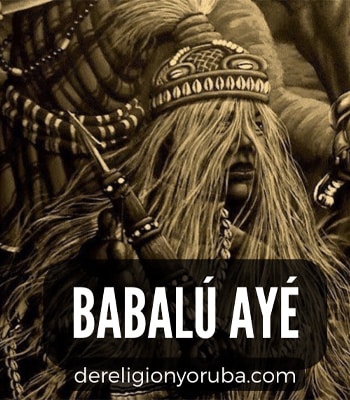
Babalú Ayé/San Lázaro is the orisha of the earth. He is accompanied by Ikú (death), the spirit of death, and through sickness many deaths occur. San Lázaro or Babalú Ayé is one of the 16 malevolent forces that come before Ikú can take a life. When we see Babalú Ayé in nature, we see the fungus that kills trees and plant life, the weeds that choke gardens and flowers, disease, and maimed animals. He is the germ that seeps into every living thing, and he is called the father of illness. Because of his voracity, the world is full of disease. And yet he is also the only one who can turn that path around.
Babalú Ayé is the half-brother of Changó, and when the diviners gathered to distribute the kingdoms, he was given the Kingdom of Dajome. Some say he is Arará Dajome by birth, though according to others he went from Lucumí land to the land of Dajome. He is the most venerated saint of Arará land. He has the appearance of an invalid, worn down by a deforming illness, with twisted legs and a bent spine. He is the owner of epidemics and diseases, the deity of smallpox, leprosy, venereal diseases and, in general, of afflictions of the skin. He is a major orisha and a deeply venerated saint.
In truth, Babalú Ayé or San Lázaro is a title meaning «father of the world,» and it was given to Chopono or Chakpata, the terrible orisha of smallpox, whose name could not be spoken aloud. In the province of Matanzas, the heirs of the Arará play the Asojín drum in honor of Babalú Ayé. He is received directly through the descendants of the Arará. San Lázaro likes to work with the dead. His color is bishop’s purple and his day is Friday, though for others it is Wednesday. His numbers are 17, 77 and 90, and he speaks in the 4, the 11 and the 13 of the Diloggún (Irosun, Ojuani and Metanlá).
The History of Babalú Ayé
In this path, Shakpata led a very disorderly life and did not obey the elders, and so he came to gather all the contagious diseases of the Yoruba land. The complaints were so many that the priests met and decided to cast him out for his disobedience. No one offered to help cure him; the only one who stayed by his side was Elegguá, for the Yorubas agreed to speak with him no more and resolved to close off his voice in the religion through the cowrie shell. Into his mouth they sewed all of his diloggún so that he could not say what he felt. Shakpata, seeing himself scorned by his people, decided to leave. As he passed, people threw water at him and said, «Take the bad away with you.» From that moment on, the cowries were read only up to the 12 so as not to remember him, since he speaks in the 13.
As he was leaving he met Eshu, who took him to the house of Orula, in the territory of Ifé. There a sign came out for him saying that he had been left mute for disobedience, that he would become very great in other lands, but that he had to make ebbó with legumes and always keep with him a dog that he asked of Oggún and Osaín. He continued his journey until he reached Dahomey. Everyone in that land lived as they pleased, except the king, who believed himself absolute God and killed and did whatever he wished. But upon seeing Chakpana, he went and knelt, begging forgiveness for the evil he had done. The natives, seeing this, joined Chakpana, and there Olofi consecrated him for having heeded the advice of Orula. He sent a heavy downpour that washed Chakpana clean of all his sins, and where he stood, the earth opened up, covering over all his ills. He founded his kingdom in Dahomey and came to be called Asojuano. That is why, although he is from Yoruba land, he attains his greatness in Arará land, where he was consecrated by the command of Olofin. For that reason the Arará revere him and hand over his fundament covered and sealed, so that all diseases remain inside it.
Characteristics
- Symbol: White staff with red markings.
- Number: 17
- Animals he eats: Hens, guinea fowl, jabado rooster, snake, quail, goat and wild boar.
- Color: Purple
- Day: Wednesday, Friday and Sunday.
The Parents of Babalú Ayé
He is considered a son of Naná Burukú, but in Abomey (Africa) his parents are Kehsson and Nyohwe Ananou. Some hold that he was born directly of Obatalá.
Animals That Belong to Him
Mosquitoes, flies and every kind of insect that carries disease, as well as white dogs with yellow patches.
Herbs Associated with Babalú Ayé
Cundiamor, sargassum, beans (all kinds), peanuts, seeds (all kinds), guagusí, pigeon pea, henequen, alacrancillo, escoba amarga, apazote, jayabico, ateje, sage, pinón de botija, caisimón, yaya, hierba vieja, hierba niña, tengue tengue, bejuco obí, pica pica, retamo, rose of Jericho (stems), sabicú, llamagua, habey (male and female), olive, sesame, prickly pear, purple bellflower, mariposa, angariya. All grains.
Syncretism
- San Lázaro
Diseases Associated with Him
Smallpox, leprosy, venereal diseases and, in general, afflictions of the skin, paralysis, amputations, gastric problems, cholera, syphilis, AIDS,
gangrene.
Elekes
The elekes (ritual necklaces) of Babalú Ayé carry black beads, beads of Oyá, matipó, beads of Babalú Ayé (white with blue stripes) and red beads. They are combined according to the path of the saint, and in some cases cowries are added. The Já or Ajás (a small broom made from the ribs of the coconut or corozo palm) and the Cachá (a kind of bracelet made from the hide of a sacrificed goat, adorned with seven cowries and the beads that the path of the saint calls for) of Babalú Ayé carry beads in the same order as the necklace that marks the path of the saint.
Offerings
The foods and adimús for Babalú Ayé include legumes and grains, burnt bread, toasted corncobs, green water coconuts, garlic, onion, dry wine, corojo, smoked fish, smoked jutía and beef neck.
Tools
The tools of Babalú Ayé include two iron dogs, two crutches and a wooden rattle. Whenever Babalú Ayé is received, an Elegguá is added along with its dog-shaped Ozun loaded with the charge of San Lázaro. If he is handed over according to the Arará ritual (Asojin), this Elegguá bears the name Afrá.
Attributes
The Ajá is a bundle of corozo or coconut palm ribs tied at the lower end with a piece of sackcloth. Cowrie shells and beads are added to adorn it, along with pieces of sackcloth, votive offerings or any implement used by the infirm, and a dog made of any material, so long as it is white with yellow patches.
As for his clothing, his ceremonial garments are made of sackcloth or of small blue-and-white checkered fabric, adorned with abundant cowries.
Sopera
Babalú Ayé has several ceremonial vessels, among them:
-
A very flat earthenware dish (much like Elegguá’s, but larger), covered with another turned upside down and sealed with cement (according to the Arará rule), or left unsealed (Yoruba). The upper part has an opening, or it is a jícara (gourd bowl) or a güiro into which are inserted feathers of a parrot and of a guinea hen sacrificed on the day of the Fifeto (Day of the Washing).
-
A dish for Elegguá Afrá, which is a reef stone with no internal charge.
-
A dish for Nanú, seven reef stones for Babalú and seven for Nanú.
-
It may also be an elongated güira cut lengthwise.
Characteristics of the Children of Babalú Ayé
Babalú Ayé is a deeply respected orisha who cares for the physical, mental and spiritual well-being of the people around him. He is known for giving not only alms but also affection, understanding and help. In Nigeria he is worshipped in the forests in times of drought. Babalú Ayé is a title that means Father of the World, and it was given to Chakpata, this orisha’s name in Africa, which could not be spoken aloud. In Cuba, this orisha watches over his children and is content with an offering of bread and coconut water, milk or dry wine. Babalú Ayé is ocanini with Changó, and Changó is the only orisha he respects. In the ceremonies of Babalú, water is not used, but rather coconut water and dry wine. He is a companion of Yewa, Obá, Yemayá and Oyá in the cemetery. Babalú Ayé learned, while dead, the true wisdom of life, and upon returning to life he showed himself to be devout, charitable and merciful.
The Paths of Babalú Ayé
- Abeolomi: Abusajón: His necklace carries 7 transparent dark blue beads, 7 white beads with blue stripes, 7 brown beads, and between each row of seven, a jet bead or black gloria.
- Afimayé: His necklace consists of 17 white beads with blue stripes, 6 brown beads interspersed with a jet bead or black gloria. 17 white beads with blue stripes, six brown beads with a black one in the middle, and then six brown beads with a black one in the middle.
- Afrekereté: His necklace carries 7 black beads, 7 brown beads, and after every seven beads, a jet bead or black gloria.
- Aldamacururú: His necklace carries 7 white beads with blue stripes, inserting an ibo cowrie after every seven.
- Aluiyá: His necklace carries 17 black beads, a black gloria or jet bead, and the cycle repeats. Asojuano-Asyorisha:
- Arará. The youngest. His necklace carries seven white beads with blue stripes, three transparent dark blue ones, one white bead between two red ones, and three dark blue ones.
- Asoyi: The Bishop. His necklace includes 14 brown beads, seven white with blue stripes, and the cycle repeats until the necklace is complete.
- Asudó: His necklace carries 17 black beads and seven brown beads. Or a plain necklace of white beads with blue stripes.
- Atimaya: Arará Ayamú: Arará Ayanise: Ayanó: The one prayed to so that he will drive epidemics away. His necklace carries 17 white beads with blue stripes, and seven white ones interspersed with white-and-blue-striped beads, then the pattern repeats until the necklace is finished.
- Awojonú or Awó: The Bishop. His necklace carries 17 white beads with blue stripes, three black ones, a jet bead or black gloria, and again three black ones; the cycle repeats.
- Babá Aluwa: His necklace carries 17 transparent navy blue beads, 7 white with blue stripes, and then a series of 7 transparent navy blue beads and white-and-blue-striped beads interspersed with one another.
- Babá Arubó Aribó: His necklace carries seven brown beads and seven black beads. Then a cycle of seven black and seven brown beads interspersed with one another.
- Babá Mafí: His necklace carries 17 white beads with blue stripes, three transparent dark blue beads, a jet bead or black gloria, and three transparent dark blue ones.
- Babá Odé: His necklace carries 7 white beads with red stripes, two black beads with a red one in between.
- Babá Wueroato: His necklace consists of 7 black beads, 3 white with blue stripes, a black gloria or jet bead, and 3 white with blue stripes.
- Babá Yonkó: His necklace includes 17 black beads with a bead of Oyá set between two white-and-blue-striped beads.
- Babalú Aguadatisa.
- Chakuata-Agróniga: A path of Yonkó, and very ancient. His necklace carries 17 white beads with blue stripes, 7 transparent dark blue beads, and a black gloria or jet bead in the middle of each series of 7.
- Chopono:
- Dakunambó: His necklace carries 17 white beads with black stripes, 3 white with blue stripes, a black gloria or jet bead, and 3 white with blue stripes.
- Esú Negué: His necklace consists of 7 black beads, 7 white with blue stripes, and between them a black gloria or jet bead.
- Kaké: His necklace includes 17 black beads with white stripes, and a gloria or jet bead.
- Lanwelosán: His necklace carries 7 black beads, 7 white beads with blue stripes, 7 transparent dark blue beads, and between each series of 7, a white bead striped in red. It may also be a plain necklace with white beads with blue stripes.
- Lokuón: His necklace consists of 17 brown beads and 7 white with blue stripes. It may also be a plain necklace with white beads with blue stripes.
- Metanlá
- Nanú: The mother of all the Babalú Ayé. Her necklace includes 17 black beads, one white with blue stripes, a black gloria or jet bead, one white with blue stripes, and 17 black. Then comes a series of interspersed beads in all the colors of the paths of Babalú Ayé.
- Nikem Babalú Borilá:
- Obarileo: His necklace consists of 17 transparent dark blue beads, 6 white with blue stripes, and in the middle of them a black gloria or jet bead.
- Osanlao: His necklace includes 7 white beads with blue stripes, 7 transparent dark blue ones, and an ibo cowrie at the clasp of the necklace.
- Osuniké: His necklace carries 17 white beads with red stripes, a black gloria or jet bead, and the cycle repeats.
- Sagbata: His necklace includes 17 white beads with blue stripes, 7 brown beads, a black gloria or jet bead, 7 transparent dark blue ones, and the cycle repeats until the necklace is complete.
- Shakpana: The Bishop. His necklace carries 7 black beads, 7 beads of Oyá, and between each series of 7, one white with blue stripes.
- Socutá: The necklace of Socutá is made up of 17 transparent dark blue beads and seven white beads with red stripes. It may also be a plain necklace of white beads with blue stripes.
- Sujjú: The necklace of Sujjú carries seven white beads with red stripes, and between them, six black beads with a black gloria or jet bead in the middle.
- Yesa: The necklace of Yesa carries white beads with blue stripes and, after every seven beads, one red bead.
The Prayer of Babalú Ayé
OBBÁ LU AYÉ, OBBÁ OGÁ OGÓ MODDUPUE BABAMI IBAN ECHÓ.
Translation
King of the world, spirit of wisdom, glorious and exalted, thank you for your blessing. So be it.
Glorioso Patrón de los Pobres, que en tantos tormentos me veo, con solo llamando tu espíritu me des lo que yo deseo, y que encuentre que mis males sean remedios con solo decir esta oración:
En el Nombre de San Lázaro, que los buenos espíritus que me ayuden y que vengan en mi auxilio, cuando yo padezca de algún mal o esté en algún peligro que me los detengas, y que a mí no lleguen, y que esto me sirva de una prueba de vuestra protección para mí y haced, San Lázaro, que tu espíritu sea mío y todo el que a mi lado estuviere, y que en ti, patrón, encuentre la fuerza que necesita mi materia para poder llevar estas pruebas de este planeta en que habitamos y de este camino que hay que pasar, mandado por Dios, nuestro Padre, pues en ti pongo mi fe para que me salves de esto y me des consuelo a mis grandes males y que por tu valor tenga otro porvenir mejor a este que tengo, y que en el nombre de San Lazaro los espíritus malos se alejen de mí para siempre con solo decir esta Oración:
San Lazaro conmigo y yo con él; él delante, yo detrás de él, para que todos mis males los haga desaparecer, la Gloria de todos. Amén.
Whoever keeps this prayer will overcome all their setbacks, and after twenty days the patron will come in dreams to show them where their fortune lies. Whoever has faith in him will also be saved.
Babalú Ayé
BABALÚ AYÉ ARO COSÍ ARO COSÍ ICÚ COSÍ YARI BABA HE BABA SOROSO
BABALÚ AYÉ OMO OBA ORICHA AYÉ AYÉ BABALÚ AYÉ EGUGU OLLA BABALÚ AYÉ
COSÍ ICÚ COSÍ YARI BABA AYUBA MAFEREFÚN.
Songs for Babalú Ayé
BABÁ E, BABÁ SOROSO BABALÚ AYÉ YA FO MO RE BABÁ SIRÉ-SIRÉ SIRÉ-SIRÉ IMÓ GBA
Translation
Father, lord; father, bind and release the calamities. Father, lord of the world; the punishments go toward your son. Father, do good, do good. Do good, good cleanses through wisdom.
Works at the Foot of Babalú Ayé
Work to Protect the Home with Babalú Ayé
Materials
- 17 different grains
- Three jícaras
- 1 small henequen sack
- A candle or lamp of San Lázaro
- 1 large vessel
- I personally had to perform this work, and below is a list of the 17 grains.
- Black beans, red beans, pigeon peas, pumpkin seeds, black-eyed peas, green peas, yellow peas, sesame, peanuts, coffee beans, broad beans, pinto beans, «breakfast» beans, green lentils, brown lentils, corn kernels and rice. Red peppercorns, black peppercorns,
wheat grains, barley, alfalfa and oats may also be used. Never use guinea pepper.
Procedure
Mix all the grains in a large vessel. Once you have mixed all the grains in the large vessel, divide them among the three jícaras and place them at the foot of Babalú Ayé for seventeen days, lighting the candle for him. After the seventeen days, one jícara is left at the foot of San Lázaro, another is used to fill the henequen sack, and the third is discarded in the wilderness. Once all this is done, place the henequen sack full of grains behind the door.
To Drive Away Illness
Materials
- Purple ribbon
- Dry corncob
Procedure
Tie the corncob with the purple ribbon behind the door. To keep illness from entering the home (valid for epidemics), a sprig of millet (Hulcus sorghum) is kept behind the door adorned with a red ribbon, along with a dry corncob rubbed with corojo butter and a holy card or prayer of San Lázaro.
For Health
Materials
- A handkerchief
- 17 cents
- Seven herbs of the saint
- Cascarilla
- 17 corn kernels
- Dry wine
- Coconut soap
- Coconut water
- Florida water
For Cleansing and Removal with Babalú Ayé
Begin by placing a handkerchief at the foot of the saint and raising a prayer to him. The herbs are placed on the handkerchief, together with the cents and the 17 corn kernels. Cascarilla is then sprinkled on top, and the four corners of the handkerchief are tied with a knot in the shape of an aspergillum. With that handkerchief the whole body is rubbed, from head to toe, in a cleansing, and it is placed behind the door at the foot of the saint. The dry wine, coconut water and Florida water are mixed in a basin; coconut soap is used to bathe, rinsing with the preparation. Finally, the handkerchief is taken to the gate of the cemetery so that the illness departs, and upon returning a candle is lit for Babalú Ayé while reciting the prayer dedicated to him: BABALÚ AYÉ ARO COSÍ ARO COSÍ ICÚ COSÍ YARI BABA HE BABA SOROSO
BABALÚ AYÉ OMO OBA ORICHA AYÉ AYÉ BABALÚ AYÉ EGUGU OLLA BABALÚ AYÉ
COSÍ ICÚ COSÍ YARI BABA AYUBA MAFEREFÚN.
For Good Fortune
A dish is used in which different kinds of grains are placed as a sign of abundance, along with bee honey to ask for sweetness and harmony, 17 cents, dry wine for joy, an alum stone for constancy, and cooking oil. A lamp is lit and a petition is made to Babalú Ayé through a prayer. Then, on the seventeenth day, an offering is made to Babalú Ayé, and when the petition is granted, alms are given in the name of San Lázaro.
The lamp may burn for as long as one wishes, but when it is taken down the ingredients must be carried to the wilderness.
Cleansing
Materials
- Seven pieces of coconut soap
- Dry wine
- Seven herbal essences
- Seven cents
- Seven eggs
- Seven candles
- A dish
Procedure
Place the eggs and the cents in the dish, and set this together with the rest of the ingredients at the foot of the saint for seven days. When bathing, first lather up, soaking the coconut soap in the container of herbal essences mixed with the dry wine, without using water. Then, while lathered, use the egg to cleanse yourself, passing it over the whole body, and afterwards bathe normally. Upon leaving the bath, light a candle to San Lázaro and recite his prayer. Take a cent from the dish, along with the egg and the piece of soap you used, and carry everything to the scrubland; break the egg by smashing it against the ground and throw down the cent and the soap. This is repeated for seven days in a row, beginning on a Thursday.
Upon recovering, help a sick person in the name of San Lázaro.
Offerings at the Foot of Babalú Ayé
Materials
- Cornmeal
- Holy water
- Milk
- Sugar
- Cascarilla
- Flat earthenware dish
- Smoked fish
- Smoked jutía
- Dry wine
- Cane syrup
- Rose honey
- Toasted corn
Corojo butter
Procedure
Knead the cornmeal with holy water, then add the sugar, milk, cascarilla, corojo butter, fish, jutía and cane syrup. Knead until the dough is firm enough to form small dumplings. Place them in the dish and sprinkle them with dry wine, rose honey and toasted corn. Leave it at the foot of the saint for seven days and then carry it to the wilderness.
An Offering of Music to Babalú
With the large native güiros — long-necked, hollowed out, adorned with a mesh of beads and filled with seeds — music is made for Babalú Ayé. It is his true musical instrument, and the rhythm he prefers is played for him on the güiro.
For a Petition
Materials
- Seven bread rolls
- A dish
- 17 candles
- Assorted grains
- A glass of dry wine
- A purple onion
- A piece of parchment
- Florida water
Procedure
Set the bread rolls to burn. On the parchment paper write your petition and place it at the bottom of the dish. On top place the assorted grains, and over these the rounds of burnt bread. Next to the dish place the glass of dry wine with the onion inside. For seventeen days light one candle each day, reinforcing your petition and making sure the glass remains full. Afterwards, the dish and the onion are carried to the wilderness, and with the remaining wine a cleansing is done of oneself or of the home, then Florida water is sprinkled about, even over the beds.