Yemayá
4.415 words 21 min read
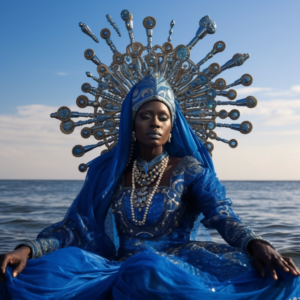
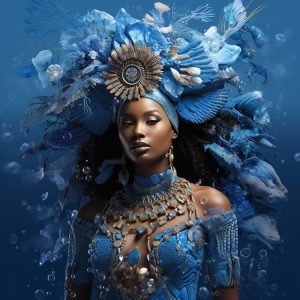
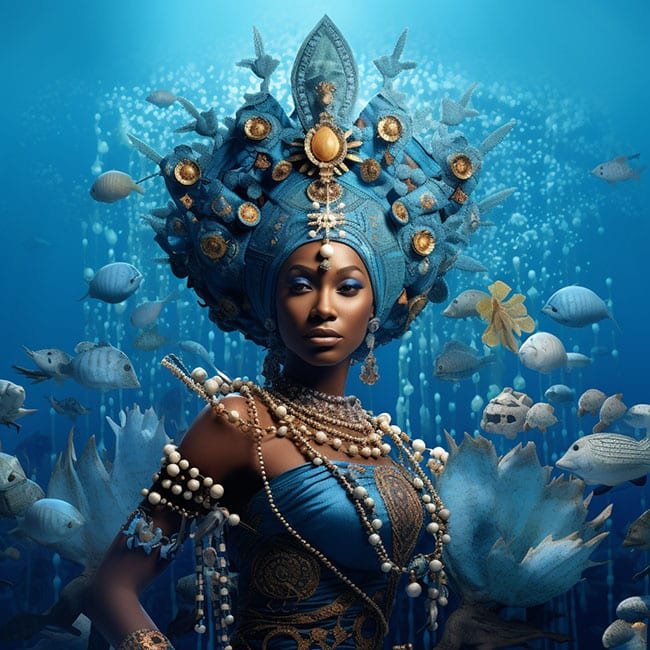
Yemayá, the powerful orisha of the sea, is a central figure in Santería and in many Afro-American religions. As the mother of all the orishas, Yemayá is far more than a deity; she is the source of life, the protector of the waters, and a spiritual guide for millions of devotees around the world. Her influence reaches well beyond African waters — she came to be venerated within the Catholic faith under the title of Our Lady of Regla (Nuestra Señora de Regla). But who is Yemayá, really? What makes her such a powerful and revered figure?
In the pages that follow, you will discover the story of Yemayá, her spiritual meaning, and how her paths intertwine with other orishas such as Oshún and Shangó. We will look at the offerings and rituals her devotees perform to earn her favor and protection, and come to understand why Yemayá remains such a vital, ever-present force in the lives of those who venerate her.
From the deep waters of the ocean to the altars of her followers, Yemayá shows us the power of the maternal, the protective, and the divine. Join us as we unveil the mysteries of this goddess of the sea and her eternal bond with nature and humankind.
Yemayá: The Story of the Goddess of the Sea in the Yoruba Religion and Her Syncretism
Yemayá, known as the goddess of the sea in the Yoruba religion, is one of the most venerated and powerful figures in the pantheon of the orishas. Her story is deeply rooted in ancient African traditions, where she is regarded as the mother of all the orishas and, by extension, of every living being. How did Yemayá come to hold such a central place in the spiritual life of millions of people? To understand it, we must travel to the heart of West Africa, where belief in this powerful goddess was born.
The Origin of Yemayá in the Yoruba Religion
According to Yoruba mythology, Yemayá is the daughter of Olokun, the deity of the ocean, and of Olodumare, the supreme creator. It is said that Yemayá rose from the primordial waters to give life to humanity and to the other orishas. In her role as universal mother, Yemayá embodies the creative force of water, the vital fluid that sustains and nourishes all life on Earth. She is the protector of the ocean, and through her waters she is believed to keep the world in balance and harmony.
Yemayá is much more than a maternal figure; she is also a warrior who fiercely defends her children and all who seek her protection. Across the centuries, Yemayá has been a constant source of strength and comfort for her devotees, who see her not as a distant goddess but as a close, protective presence in their lives.
Yemayá and Her Syncretism in the Catholic Faith
With the arrival of Africans in the Americas through the slave trade, Yemayá, like many other African deities, found herself in a new cultural and religious environment. To preserve her veneration in a world where Christianity was the dominant religion, enslaved Africans began to syncretize Yemayá with figures from the Catholic calendar of saints. Thus Yemayá came to be identified with Our Lady of Regla, a Virgin deeply venerated in Cuba and known, likewise, as the protector of the seas.
This syncretism allowed the worship of Yemayá to stay alive under the appearance of Catholic devotion. In places like Cuba and Brazil, Yemayá is celebrated both in African religious ceremonies and in Catholic festivities — living proof of the unique blend of beliefs that defines Santería and other Afro-American religions.
Yemayá Today: A Symbol of Resilience and Faith
Today, Yemayá remains a cornerstone of spirituality for many communities. Her image, both in the Yoruba religion and in her syncretized form, stands for the resilience and adaptability of a faith that has withstood centuries of oppression and transformation. Yemayá is not only the goddess of the sea; she is a beacon of hope and a source of power for all who seek her guidance and protection in a changing world.
Who Is Yemayá in Santería, and How Is She Syncretized in the Catholic Faith?
Yemayá is a central figure in Santería, an Afro-Cuban religion that blends elements of the Yoruba religion with Catholicism, born of the religious syncretism that took place under colonization. In Santería, Yemayá is worshipped as the mother of all the orishas and the protector of the sea. Her power is believed to stretch from the depths of the ocean to its shores, where she watches over every living being that depends on water to survive. Her bond with water is not merely physical but spiritual; Yemayá is seen as the source of life, the womb that nourishes humanity.
But how did Yemayá become woven into the Catholic faith? During the era of slavery, Africans brought to the Americas found ways to preserve their beliefs under the outward forms of Christianity. Yemayá, with her maternal, protective role, was syncretized with Our Lady of Regla, a Marian devotion venerated in Cuba. This Virgin is also a protector of the seas, which made the identification with Yemayá a natural one for devotees who wished to keep their faith alive beneath the mantle of Catholicism.
Yemayá in Santería: The Mother of All the Orishas
In Santería, Yemayá is anything but a distant figure; she is an orisha actively present in the daily lives of her followers. She is invoked in rituals for protection and fertility, and to bless those whose livelihood depends on the sea, such as fishermen. The children of Yemayá — those who feel a special bond with her — often wear necklaces and bracelets in shades of blue and white, colors that stand for the sea and for purity.
Rituals in Yemayá’s honor include offerings of fruit, flowers, and special dishes prepared with ingredients that evoke the riches of the ocean. In keeping with Yoruba tradition, animals such as the duck, the rooster, and the goat are also sacrificed to ask for her protection and blessings. These rituals are not only displays of devotion; they seek to establish a direct connection with the goddess, asking her to intervene in times of need.
Yemayá in the Catholic Faith: Our Lady of Regla
Religious syncretism allowed Yemayá to survive and adapt to a new cultural context. In Cuba, Yemayá is celebrated every September 7 as Our Lady of Regla, a figure venerated both in Catholic churches and on Santería altars. During these festivities, devotees go to the churches and to the shore to offer flowers, fruit, and candles, asking for the protection of the Virgin and of Yemayá. This syncretism stands as testimony to the cultural resilience of enslaved Africans, who managed to preserve their spiritual heritage by fusing it with Catholic belief.
Our Lady of Regla is venerated as a protective mother who intercedes in the dangers of the sea and in the challenges of daily life. The connection between Yemayá and this Marian figure reflects not only cultural adaptation but also the universality of the protective-mother archetype found across religious traditions.
The Duality of Yemayá: Bridging Traditions
To this day, Yemayá remains a symbol of strength, protection, and motherhood in both Santería and the Catholic faith. This duality allows her devotees to find comfort and spiritual guidance in different settings, whether through Yoruba rituals or Catholic prayers. Yemayá, as Our Lady of Regla, continues to be a beacon of hope for those who seek her help, proof that her power transcends cultural and religious boundaries.
Yemayá: Characteristics, Attributes, and Spiritual Meaning of the Goddess of the Sea
Yemayá is not merely a venerated deity; she is a complex, many-sided symbol embodying different forces and facets of life, above all in her dominion over the waters and the ocean. Here we will look in detail at the characteristics that define her, the attributes that represent her, and the deep spiritual meaning she carries.
Characteristics of Yemayá
- Elemental and Maternal: Yemayá is the personification of the ocean, and as such she is inseparably bound to motherhood and creation. She is seen as the source of life, for water is essential to existence. Her character is protective yet powerful, mirroring the dual nature of the sea: calm and nourishing, but capable of unleashing relentless storms when defied.
- Just and Firm: Although Yemayá is known for her compassion, she is also a figure of justice and severity. She does not tolerate offenses and is known to punish those who disobey or disrespect her. Her justice is balanced, always in service of keeping order and harmony.
Attributes of Yemayá
- Symbols and Representations: Yemayá is associated with a series of symbols that reflect her dominion over the sea and over life. Chief among them are the hand fan, the fish, the moon, and seashells. These symbols speak not only of her bond with water, but also of her influence over fertility and the protection of her devotees.
- Offerings and Colors: Yemayá’s devotees offer her fruit (especially watermelon), white and blue flowers, and objects from the sea such as shells and conches. Her principal colors are blue and white, standing for the ocean and for purity. These colors also adorn the elekes (the ritual necklaces) and other ritual objects associated with her.
- Rituals and Celebrations: Yemayá is honored with rituals often held close to the water, by rivers and by the sea. They may include dances, songs, and offerings cast into the water as a sign of respect and devotion. Yemayá’s Feast Day holds special meaning in the communities that venerate her, a moment set aside to ask for her blessing and protection.
Animals Sacrificed to Yemayá
In the Yoruba religion and in Santería, Yemayá is one of the most venerated orishas, and her devotees pay her homage through ritual sacrifices that reflect her bond with the sea and with life. The animals offered to Yemayá are carefully chosen to symbolize different aspects of her power and protection.
- Rams: The ram is a symbol of strength and endurance. It is sacrificed in ceremonies that seek Yemayá’s mighty protection and her intervention in critical matters.
- Ducks: Ducks are closely tied to water, Yemayá’s domain, and represent fluidity and the connection between land and sea. Their sacrifice is a mark of respect for Yemayá’s authority over the waters.
- Hens and Guinea Hens: Hens, along with guinea hens, are common offerings. Guinea hens in particular are highly valued in rituals seeking purification and protection, as they are believed to carry a strong spiritual connection.
- Doves: Doves symbolize peace and are sacrificed in ceremonies that ask Yemayá to bring balance and harmony to emotional or family matters.
- Quail: Quail, for their delicacy, are offered in rituals that call for a subtle, careful intervention, representing the precision with which Yemayá handles the affairs of her devotees.
- Geese: These animals, at home on both land and water, are offered to reflect the dual nature of Yemayá, who protects and commands the forces of nature.
Each of these sacrifices is a way of honoring Yemayá and keeping a deep connection with her, seeking her favor and her guidance in daily life. These ritual acts reflect the devotion and respect that Yemayá’s followers feel for their powerful orisha.
Yemayá, Oshún, and Shangó: The Bond Between These Orishas in the Yoruba Religion
In the Yoruba religion, every orisha has a domain, a personality, and a role within the pantheon, but the relationship between Yemayá, Oshún, and Shangó is especially deep and symbolic. These three powerful deities not only govern essential aspects of life; they are also interwoven through myths, stories, and rituals that reveal the richness of Yoruba spirituality.
Yemayá and Oshún: Two Faces of the Feminine
Yemayá and Oshún are two of the most venerated female figures in the Yoruba religion, and though each embodies a different aspect of the feminine, theirs is a relationship of complementarity. Yemayá, as the goddess of the sea, is the universal mother, the protector of life and patron of the seas and salt waters. She is strong, maternal, and at times fearsome, ruling with a mixture of love and justice.
Oshún , for her part, is the goddess of the rivers, of fresh waters, and of fertility. She embodies beauty, love, and sensuality. Where Yemayá watches over her children with the force of the ocean, Oshún does so with the sweetness of the river. Together, the two goddesses work to keep balance in nature and in human life. In many rituals, Yemayá and Oshún are invoked side by side, in recognition that the feminine is not monolithic but a weave of strength and tenderness, of protection and passion.
Shangó: Masculine Power and His Bond with Yemayá and Oshún
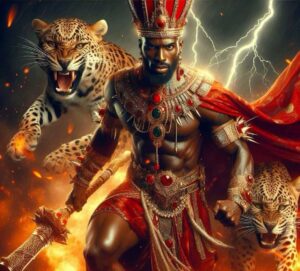
Shangó, the orisha of thunder, fire, and war, is one of the most important and venerated deities in the Yoruba religion. Known for his courage and destructive power, Shangó is also the patron of drums, dance, and music, making him a symbol of vitality and masculine energy.
The relationship of Shangó with Yemayá and Oshún is complex and rich in symbolism. According to the Yoruba myths, Shangó is a son of Yemayá, which places him under her protection and guidance. As his mother, Yemayá gives him not only spiritual sustenance but also the strength he needs to fulfill his role as a warrior leader. Shangó also has a close bond with Oshún, who in many stories is one of his wives. Where Yemayá represents maternal authority, Oshún brings passion and love into Shangó’s life.
A Powerful Trio in Yoruba Spirituality
The interplay between Yemayá, Oshún, and Shangó represents the balance of forces that lies at the heart of Yoruba spirituality. Yemayá brings protection and life, Oshún beauty and fertility, and Shangó power and strength. Together, these orishas form a triangle of energy that guides, protects, and sustains their devotees in every aspect of life.
Have you ever wondered how these orishas shape your daily life? For devotees of the Yoruba religion, calling on Yemayá, Oshún, and Shangó is not just an act of faith but a way of aligning their lives with the fundamental forces of the universe. In every ritual, in every prayer, these orishas work together to bring balance, justice, and harmony into the lives of their followers.
What Are the Children of Yemayá Like, and How Do You Know If You Are One?
In the Yoruba religion and in Santería, every person is believed to have a tutelary orisha, a spiritual guide who protects them and shapes their character. If Yemayá is your spiritual mother, this may show itself in many ways — in your personality and in the experiences you live through. But what are the children of Yemayá like, and how can you know whether you are one of them?
Characteristics of the Children of Yemayá
The children of Yemayá tend to mirror the strength, wisdom, and protective character of this powerful orisha of the sea. Like Yemayá, known for her capacity to nurture and protect, her children are often compassionate people with a deep emotional connection to others. They are recognized for their ability to care for and support those around them, standing as pillars of their communities and families.
Have you noticed that you are the natural counselor in your close circle? The children of Yemayá carry a strong sense of responsibility and tend to be trustworthy people, the ones others turn to for guidance. They are protectors by nature, and their presence usually brings a sense of safety and calm to those around them. They can also be highly intuitive, with a strong connection to their emotions that lets them empathize easily with what others feel.
Physical and Behavioral Traits of the Children of Yemayá
As for physical traits, there is no strict rule, but many children of Yemayá are described as people with a commanding presence and an aura of serenity. They may be of sturdy build or of gentler appearance, but they always convey a sense of solidity and steadiness. Their affinity for water is another common trait; they are often drawn to the sea, to rivers, and to other bodies of water, where they find peace and renewal.
The children of Yemayá also tend to carry a strong sense of justice, much like the character of their spiritual mother, who is known for punishing severely those who break her rules. Are you deeply troubled by injustice or by mistreatment of others? This is another sign that Yemayá may be your spiritual mother.
How to Know If You Are a Child of Yemayá
Determining whether you are a child of Yemayá is not something to be done superficially. In Santería, this revelation usually comes through a deep spiritual process, which may include a consultation with a babalawo (a priest of Ifá) or an experienced santero. In these consultations, a person’s tutelary orisha is revealed through specific rituals and divinations, such as the reading of the cowries (the Diloggún) or the oracle of Ifá.
Even so, if you feel an inexplicable bond with the sea, if you recognize yourself in the traits described above, and if Yemayá holds a special place in your heart, this powerful orisha may be calling you. Have you ever felt that the ocean speaks to you, or offers you comfort? Devotees believe that Yemayá communicates with her children through water, and feelings like these could be a sign of her presence in your life.
The Path of the Children of Yemayá
Being a child of Yemayá is not just a spiritual title; it is a way of life. It means living with a commitment to protect, nurture, and support others, following the example of the great mother of the ocean. As you grow in your devotion to and understanding of Yemayá, you will also learn to work with her energies, calling on her power in times of need and giving thanks for her guidance in times of plenty.
Do you believe Yemayá is your spiritual mother? If so, beginning to honor her and deepening your relationship with her can bring greater peace and clarity into your life. Remember that, as in any relationship, the bond with your tutelary orisha deepens with time, dedication, and respect.
Offerings, Rituals, and Devotional Phrases to Honor Yemayá
Yemayá, the powerful orisha of the sea, is honored by her devotees through offerings and rituals charged with meaning. These practices are not only acts of veneration but also a way of connecting deeply with the goddess, seeking her protection, guidance, and blessings. Have you ever wondered how to honor Yemayá in the most respectful and effective way? Here are some of the most common and powerful ways to do so.
Offerings to Yemayá: What to Bring Her, and When
The offerings made to Yemayá reflect her bond with the sea and the life that flows from it. Among the most common are fruits, flowers, and dishes that evoke the abundance of the ocean. Traditional offerings include:
- Fruits such as watermelon, pineapple, and grapes: Fresh and full of juice, these fruits symbolize the life and fertility Yemayá grants her devotees.
- White and blue flowers: Yemayá’s colors are blue and white, standing for the ocean and for purity. Flowers in these colors are offerings that delight the goddess.
- Seashells and conches: These gifts of the sea are sacred symbols of Yemayá, representing her dominion over the waters and her power to protect her own.
- Dishes such as ekó and olelé: Made from corn and beans and wrapped in plantain leaves, these traditional dishes symbolize the bond between land and sea — along with chicharrón and tostones of green plantain.
A special offering: When Yemayá is angered, or when her fury needs to be calmed, she is offered watercress, lettuce, chayote, and purslane, known for their cooling properties.
Rituals to Connect with Yemayá
Rituals for Yemayá are an integral part of her worship, through which her devotees seek her intervention in matters of health, love, and protection. One of the best known is the purification in the sea, in which followers immerse themselves in the waters to cleanse their spirit and renew their energy under Yemayá’s blessing.
- Purifying bath in the sea: Devotees often bring offerings to the ocean, immersing themselves in its waters while reciting prayers and songs in Yemayá’s honor. This ritual is especially popular on feast days such as Yemayá’s Day, celebrated on September 7 in Cuba.
- Lighting candles: Lighting blue and white candles on altars dedicated to Yemayá is a common way to ask for her protection and guidance. The candles represent the light and clarity Yemayá brings into the lives of her devotees.
- Offering food: Preparing and offering special dishes to Yemayá on feast days or during ceremonies is another way to honor her. These foods, which may include fresh fish and corn-based dishes, are placed on altars or carried to the sea as a sign of devotion.
Phrases and Prayers to Yemayá
The phrases and prayers addressed to Yemayá are powerful vehicles for expressing devotion and asking for her help. These prayers often invoke her protection, ask for her blessing in times of need, or simply give thanks for the abundance and peace she grants.
A common prayer to Yemayá: «Oh, Yemayá, madre de las aguas, tú que das vida y protección, escucha mi llamado. Que tus aguas purifiquen mi alma y me guíen hacia la paz y la abundancia. Yemayá, madre poderosa, reina del mar, te pido que bendigas mi camino y protejas mi hogar. Maferefun Yemayá.»
Devotional phrase: «Yemayá, madre de la vida, guíanos con tu sabiduría y protégemos con tu manto de amor.»
Conclusion: Honoring Yemayá in Daily Life
Honoring Yemayá is not limited to specific rituals and offerings; it is an act of love and respect that can find expression in everyday life. Every time you draw near the sea and watch its waves, you can feel Yemayá’s presence. Every prayer, every phrase spoken with devotion, is a thread that strengthens your bond with this powerful orisha. Are you ready to call on Yemayá and feel her protection in every part of your life?
Patakíes of Yemayá: Stories That Reveal Her Power and Wisdom
The patakíes are sacred stories that pass down the ancestral wisdom and the power of the orishas in the Yoruba religion. Through these stories, Yemayá’s devotees learn not only about her divine qualities but also about the moral and spiritual teachings that guide their lives. Below, we explore some of the best-known patakíes that show Yemayá’s strength, her sacrifice, and her wisdom.
The Birth of Yemayá and the Creation of the World
One of the most important patakíes about Yemayá tells of her role in the creation of the world. According to this story, Yemayá, daughter of Olodumare and Olokun, rose from the primordial waters and gave origin to all the orishas and to humankind. From her womb, when it burst open, the deities and human beings were born, a symbol of her power of creation and of her role as universal mother. This patakí underlines Yemayá’s importance as the source of life and her unbreakable bond with the ocean, the origin of all existence.
Yemayá and Orula: Guardian of Knowledge
Another patakí tells the story of Yemayá and Orula, the great diviner. Yemayá, as Orula’s wife, taught him the secrets of the cowries (the Diloggún), which she had obtained from the sea. Thanks to this knowledge, Orula became the wisest of diviners. But when Orula went away, Yemayá took up his role as counselor, performing the divinations herself. Though Orula was angered on his return, Olodumare decreed that Yemayá would forever hold the right to use the cowries to guide those in need. This patakí highlights Yemayá’s wisdom and independence, and her power to protect and guide her community.
Yemayá and the Command Never to Renounce
One of the most revealing patakíes about Yemayá’s strength tells how she was put to the test by Olodumare, who decreed that she must never renounce or curse any adversity that befell her. Despite great misfortunes — betrayals and losses among them — Yemayá never complained nor showed weakness. Instead, whenever she felt pain, she immersed herself in the waters of the ocean, finding in her natural element the strength to carry on. This sacrifice, and her capacity to endure suffering without complaint, made her even more powerful and respected among the orishas and among human beings. Seeing her endurance, Olodumare rewarded her with even greater authority over the waters, reaffirming her role as the great mother and protector.
How Yemayá Saved the World
In another patakí, we are told how Yemayá saved the world from a devastating drought that threatened to destroy all life. Seeing humanity’s suffering, Yemayá chose to sacrifice herself, opening her womb to release the waters needed to save the world. This act of sacrifice symbolizes her unconditional love and her readiness to do whatever it takes to protect her children.
Reflections on the Patakíes of Yemayá
Every patakí about Yemayá is a lesson in itself. Through these stories we see not only her immense power but also her deep commitment to humanity. Whether creating life, sharing knowledge, enduring suffering without complaint, or sacrificing herself to save the world, Yemayá shows us that true strength and wisdom spring from love, resilience, and the protection of others.
Conclusion: Yemayá, a Source of Life and Wisdom That Transcends Borders
Yemayá, the great mother of the ocean, is far more than a deity of the Yoruba religion; she is a symbol of life, wisdom, and resilience that has crossed oceans and borders, touching the hearts of millions of people around the world. Her power lies not only in her capacity to create and protect, but in her ability to guide her devotees with love and justice, even in the hardest of times. Through her patakíes and her presence in Santería and in the Catholic faith, Yemayá remains a beacon of hope and strength, reminding us that whatever challenges we face, we can always find comfort and renewal in her eternal embrace.
Related Orishas
OSHUN
CHANGÓ
ELEGGUA