Yoruba Religion
Do You Want to Know What the Yoruba, Lucumí or Santería Religion Is?
Contents

Explore Yoruba and Lucumí Spirituality
Meet the Orishas
15 Principal Orishas
Traditions and Branches
Religious Syncretism
Differences between Yoruba and Lucumí
Divination Systems
Language
Offerings
Contents:
Explore Yoruba and Lucumí Spirituality
Meet the Orishas
15 Principal Orishas
Traditions and branches
Religious Syncretism
Differences between Yoruba and Lucumí
Divination Systems
Language
Offerings
Oyekun Batrupon
Oyekun Batrupon (Oyekun Otrupon – Oyekun Trupon): Patakíes, Meaning, Advice, Works or Ebbó, and Secrets. Prayer to Oyekun Batrupon: Oyekun batrupon ifá ni unlosile ilare lokin…
aless mor –
Ogunda Otura (Ogunda Tetura)
OGUNDA OTURA (OGUNDA TETURA): PATAKÍES, MEANING, ADVICE, WORKS OR EBBÓ, AND SECRETS. PRAYER: Ogunda Tetura Awo Maddi Awo Nareko Awo Namare Soddo Obara Yenifa Nomini…
aless mor –
Iroso Ofun
IROSO OFUN (IROSO FUMBO): PATAKÍES, MEANING, ADVICE, WORKS OR EBBÓ, AND SECRETS. Iroso Fun Oshu Oponi Minuma Awado Orilele Lori Apata Inbujo Nibeshubu Inbelotan Unbe…
aless mor –
Obara Bogbe
OBARA BOGBE (OBARA OGBE): PATAKÍES, MEANING, ADVICE, WORKS OR EBBÓ, AND SECRETS. Obara Bogbe Lantosi Omodu Omi Ke Eboada Felebo, Okilanfiru Eku, Okilanfiru Eya, Okilanfiru…
aless mor –
Odi Irete
ODI IRETE (ODI LEKE): PATAKÍES, MEANING, ADVICE, WORKS OR EBBÓ, AND SECRETS. Odi Leke Awari Odi Olowo Ashupa Odoloro Odiguin Odafun Orunmila Orubo. IFÁ SAYS ODI…
aless mor –
Iroso Ojuani
IROSO OJUANI (IROSO WANI – IROSO JUANI): PATAKÍES, MEANING, ADVICE, WORKS OR EBBÓ, AND SECRETS. Maferefun Yalorde Y Shangó. Anaboro Ona Odo Adifafun Orulollo Eyele…
aless mor –
Iroso Sa
IROSO SA (IROSO OSA – IROSO SUN SUN): PATAKÍES, MEANING, ADVICE, WORKS OR EBBÓ, AND SECRETS. Iroso Sa Ifá Pele Pele Lile Oguele Wa Guere…
aless mor –
Ogunda Okana
Ogunda Okana (Ogunda Foloko Kana – Ogunda Ko): Patakíes, Meaning, Advice, Works or Ebbó, and Secrets. Prayer: Ogunda Ko Oni Bawa Ifá Ori Laye Baba Oniboshe…
aless mor –
Obara Koso
OBARA KOSO (OBARA IROSO): PATAKÍES, MEANING, ADVICE, WORKS OR EBBÓ, AND SECRETS. Obara Koso Ifá Duro Ifá Nire Ireku Kaferefun Orunla, Eshu Ati Oggún. IFÁ SAYS…
aless mor –
Okana Otrupon
Okana Otrupon (Okana Trupon): Patakíes, Meaning, Advice, Works or Ebbó, and Secrets. Description of the Sign: Okana Otrupon ikanifori ikaniyu ni masuku logue ni olorin obini. What does…
aless mor –
The Yoruba religion is one of the oldest and richest spiritual traditions to come out of West Africa, particularly from what we know today as Nigeria. Olodumare, the Supreme God, is the creator of all things, but he does not act alone. This god delegates his dealings with the world to a series of deities or spirits known as orishas.
Have you ever wondered how these beliefs have stayed alive across the centuries? The Yoruba religion is not just a set of rites; it is a way of life. In everyday life, the connection with the orishas is fundamental, since these spirits are believed to influence every aspect of human existence: from health and prosperity to protection and wisdom.
At the heart of this spirituality lies the belief that every person has a destiny to fulfill. To achieve it, the Yoruba seek the guidance and protection of the orishas through rituals, offerings, and spiritual consultations.
Although the Yoruba religion has its origin in Africa, its history and influence have spread across the world through the African diaspora, giving rise to other practices such as Santería in Cuba and Candomblé in Brazil. Did you know that in many places, Yoruba practices merged with Christianity? This syncretism has allowed the Yoruba religion to evolve and adapt, remaining relevant in the modern world.
In short, the Yoruba religion is a tradition that honors nature, celebrates life, and deeply connects its followers with the spiritual world. Do you feel drawn to this deep spiritual connection? Then exploring the Yoruba religion may be the path you are looking for.
Origins and Evolution of the Santería Religion
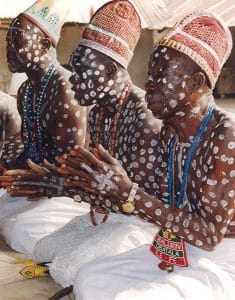
The Yoruba religion has its roots in the ancient civilizations of West Africa, specifically in the region known today as Nigeria and parts of Benin. This belief system developed over thousands of years, deeply interwoven with the daily life and culture of the Yoruba peoples. Can you imagine how the people of those times interacted with the divine?
The Yoruba shaped a pantheon of deities known as the orishas, each with its own personality, attributes, and areas of influence. These orishas are not mere divine figures; they embody the forces of nature and aspects of human life. Olodumare, the Supreme God, delegated the creation and governance of the world to these orishas, who interact directly with human beings.
During the sixteenth century, with the rise of the transatlantic slave trade, many Yoruba were forced to leave their homeland and were taken to the Americas and the Caribbean. Did you know that even under those extreme conditions, Yoruba beliefs not only survived but also evolved? In Cuba, Brazil, Haiti, and other countries of the African diaspora, the Yoruba religion merged with elements of Christianity and other local religions, giving rise to new traditions such as Santería, Candomblé, and Vodou.
This capacity for adaptation and syncretism allowed the Yoruba religion to remain alive and relevant despite the harsh circumstances its practitioners faced. Today, the Yoruba religion is practiced not only in Africa but has a global presence, connecting people from different cultures with their ancestral and spiritual roots.
The evolution of the Yoruba religion is a testament to the resilience and spiritual strength of the peoples who keep it alive. From its origins in Africa to its adaptation in the Americas, this tradition remains a source of guidance and wisdom for millions of people around the world.
The Orishas: Deities and Protective Spirits
The orishas are key figures in the Yoruba religion, acting as intermediaries between human beings and Olodumare, the Supreme God. Each orisha embodies a natural force or an aspect of life, such as love, war, or justice. Did you know that every person has a protective orisha? This orisha guides and protects the devotee throughout their life.
For example, Eleggua is the guardian of the roads, always invoked at the start of rituals to open or close the way. Yemayá, the mother of all the orishas, symbolizes protection and motherhood. Did you know that every person has an orisha who rules their head, known as their «Santo»? This personal orisha is like a guardian who guides the person throughout their life.
Devotees connect with the orishas through rituals, offerings, and prayers, forging a deep bond with these protective spirits. In daily life, this relationship offers guidance and protection, creating a sense of community and belonging among those who practice the Yoruba religion.
Principal Deities of the Yoruba or Lucumí Religion
Eleguá
The god of the roads and of our destiny. He is associated with protection and good fortune.
Obatalá
The god of creation and wisdom. He is associated with peace and is considered the creator of human beings.
Changó
God of thunder and of wars.
Oshun
The goddess of the river. She is associated with sensuality and joy, and is venerated as the protector of life and love.
Yemayá
The goddess of the sea. She is associated with motherhood and protection.
Obba
Obba is an orisha of the Yoruba pantheon, known as the deity of marriage, fidelity, and sacrifice.
Oggún
He is associated with the forge, war, and iron. He is said to be a strong and defiant orisha.
Oyá
The goddess of death and the cemetery. She is associated with strong winds and storms.
Oshosi
The orisha of hunting and justice.
Orisha Oko
Orisha of agriculture and prosperity.
Olokun
Orisha of the seas and of wealth.
Eshu
Orisha of the crossroads and of chaos in life.
Orunmila
The orisha of divination and wisdom. He is associated with wisdom and prophecy.
Ainá
Orisha invoked when one seeks to put out fires (wars).
Babalú Ayé
The orisha of illness and healing.
Branches and Traditions within the Yoruba Religion
Traditional Yoruba
Candomblé
Santería
Ifá
The Santería religion is a complex spiritual system that encompasses diverse beliefs and practices, all of them centered on interaction with the spiritual world through the orishas and other sacred elements. Within this religion there are different branches or traditions, each with its own approach and its own ways of interpreting these beliefs.
Traditional Yoruba is the indigenous practice of the Yoruba peoples in West Africa, where worship is given to Olodumare, the Supreme God, and to the orishas. Ifá, the divination system, is crucial in this branch, providing spiritual guidance and answers through the orisha Orunmila.
In the Americas, these beliefs adapted and merged with other religions. Santería, or the Rule of Ocha, which developed in Cuba, is a blend of the Yoruba religion, Roman Catholicism, and, in some cases, Indigenous American beliefs. Did you know that in Santería the orishas are syncretized with the Catholic saints?
Candomblé, which originated in Brazil, also blends Yoruba beliefs with Catholicism and, at times, with Indigenous Brazilian beliefs. This syncretism is a clear example of how the Yoruba religion has proven to be resilient and adaptable.
The term Lucumí sometimes refers to the Yoruba religion as practiced in Cuba, but it is also used specifically to describe the dialect of the Yoruba language used in the religious ceremonies of Santería.
Finally, Ifá, although it is an integral part of all these traditions, is sometimes considered a separate branch because of its focus on divination and the wisdom provided by Orunmila. Through Ifá, devotees seek answers and guidance to fulfill their destiny.
Religious Syncretism: The Fusion of the Yoruba Religion with Other Traditions
Religious syncretism allowed the Yoruba religion to adapt to new settings, especially in the Americas, where it merged with Catholicism. A clear example is Santería in Cuba, where the orishas are syncretized with the Catholic saints, allowing Yoruba beliefs to survive under colonial oppression. In Brazil, Candomblé also shows this fusion, combining Yoruba beliefs with Catholic and, in some cases, Indigenous influences.
This process of syncretism shows the resilience of the Yoruba religion, which has remained alive and relevant by adapting to different cultural contexts, enriching the spiritual traditions of every place where it has taken root.
Comparison between Yoruba and Lucumí
The Yoruba religion and the Lucumí religion share common roots, but they have evolved in distinct ways because of their cultural contexts. The Yoruba religion is practiced in West Africa, especially in Nigeria and Benin, where devotees follow the ancestral rituals and customs, using the Yoruba language in ceremonies.
In Cuba, the Yoruba religion adapted and gave rise to the Lucumí religion, the result of the syncretism between African beliefs and Catholicism. Here, the orishas are syncretized with the Catholic saints, and the Lucumí language, a variant of Yoruba, is used in the rites.
Although both venerate the same orishas, the rituals can vary. In Africa, the rites follow the original traditions, while in Cuba these rituals incorporate elements of Catholicism. The Lucumí religion has evolved in an urban and multicultural context, keeping its relevance in modern life.
In short, the resilience of these religions has allowed them to adapt to different environments, keeping the spiritual connection with the orishas alive in diverse contexts.
Lucumí Divination Systems
In the Yoruba religion, there are several methods of divination used to learn about the future or receive guidance in life. These systems are fundamental for connecting with the orishas and obtaining their counsel at crucial moments. The best-known methods are described below:
Epkuele (Ekuele or Okuele)
The Epkuele is an essential divination instrument in the practice of Ifá. Used by babalawos (priests of Ifá), this instrument allows them to communicate with Orunmila (Orula), the orisha of wisdom and divination. The Epkuele consists of a chain of eight segments, which may be made of kola-nut shells, bone, ivory, or metal. Each segment can fall in one of two positions, forming one of the 256 possible odu. These odu are interpreted to provide clarity and counsel about present and future events. Through the Epkuele, the babalawos seek the guidance of Orunmila and other orishas to make decisions and resolve problems.
The Ifá Board
The Ifá Board is another crucial element of divination within the Yoruba religion. This board contains 16 geometric figures, each with a specific meaning. The babalawos use the board to perform readings that allow them to receive messages from the orishas, thereby offering spiritual guidance to devotees. It is a fundamental tool in Yoruba religious practice, symbolizing the direct connection between the spiritual world and the human one.
Diloggun
The Diloggun is a divination system that uses sea cowries to foretell the future. The absolute owner of the Diloggun is Elegguá, who is consulted through a ritual performed by the olorisha (priest). The cowries are interpreted to provide guidance about the life of the person being read, helping them better understand their destiny and the decisions they must make.
Obí
The Obí is another divination method that uses the flesh of the coconut to foretell the future. This system is used in various ceremonies within the Yoruba religion, offering insight into the destiny and life of the person consulting. It is a common practice in rituals that seek clarity and balance in spiritual life.
Obi Ibo
The Obi Ibo is a form of divination that uses animal bones to obtain answers about the future and the life of the person consulting. Each cast of the bones reveals patterns that the priests interpret to guide devotees in their decisions and along their spiritual path.
These divination methods are fundamental in the Yoruba religion, each with its own methodology and symbolism. They are used in different situations to obtain answers and guidance about life, connecting the person consulting with the ancestral wisdom of the orishas.
Language
Yoruba is the principal language of the Yoruba religion, spoken by approximately 20 million people in Nigeria, Benin, and Togo. This African language is not merely a means of communication; it holds sacred value within the religion. It is used in rituals, invocations, and in the transmission of spiritual knowledge from generation to generation.
In the African diaspora, especially in Latin America, languages such as Spanish and Portuguese are also common among followers of the Yoruba religion. Even so, Yoruba remains central to religious practice, since its use in rituals ensures that the essence and authenticity of the spiritual traditions remain intact.
Over the years, the Yoruba language has proven to be a crucial vehicle for preserving and transmitting the ancestral wisdom of the orishas and of the religion as a whole.
Offerings Used in Yoruba Worship
In Yoruba spirituality, offerings are essential for honoring and acknowledging the orishas, forming a fundamental part of religious practice. These offerings symbolize gratitude, respect, and the intention to maintain a spiritual connection with the deities.
Common Types of Offerings
- Food: Foods such as fruits, vegetables, meats, fish, and rice are offered to the orishas, each of whom has specific preferences.
- Water: Fresh water is a customary offering, especially for Yemayá, the queen of the sea, as a symbol of purity and renewal.
- Candles: Candles are lit to provide light and warmth to the orishas, symbolizing the clarity and protection one hopes to receive.
- Flowers: Fresh flowers are typical offerings, particularly for Oshún, the goddess of love and of the rivers, representing beauty and purity.
- Perfumes and Essential Oils: These are used to perfume the offerings and the shrines, creating a sacred and welcoming atmosphere for the orishas.
- Musical Instruments: Drums, maracas, and other instruments are offered in homage, accompanying the rituals with music and dance to honor the deities.
- Animals: In specific sacrifices, animals such as goats, doves, and others are offered, following rituals strictly established by the tradition.
Ogbe Ate
Prayer and Suyere – Ogbe Ate body { font-family: 'Roboto',…
aless mor –
Ofun Otrupon
OFUN OTRUPON (OFUN BATRUPON – OFUN DIN DIN): PATAKÍES, MEANING, ADVICE, WORKS OR EBBÓ, AND SECRETS. Ofun Batrupon Moyete Te Momo Tente Mana Oyuoro Unfo…
aless mor –
Otura Niko
OTURA NIKO (OTURA EJIOGBE): PATAKÍES, MEANING, ADVICE, WORKS OR EBBÓ, AND SECRETS. Otura Niko Liko Ikorewa Liko Ikobie Kosi Adifafun Daduro Abo Ati Oti Elebo. IFÁ…
aless mor –
Otura Kana
OTURA KANA (OTURA TIKU): PATAKÍES, MEANING, ADVICE, WORKS OR EBBÓ, AND SECRETS. Otura Tiku Ikú Awo Monana Aboluloye Bira Boru Ikú Awele. IFÁ SAYS OTURA KANA. There is…
aless mor –
Oyekun Bika
Oyekun Bika (Oyekun Ika): Patakíes, Meaning, Advice, Works or Ebbó, and Secrets. Prayer: Oyekun Oyewodelaka Adifafun Oyekun Adifafun Ika. Oyekun Bika Alake Edon Adifa Oye Oka…
aless mor –
Ofun Obara
OFUN OBARA (OFUN SUSU – OFUN BADO): PATAKÍES, MEANING, ADVICE, WORKS OR EBBÓ, AND SECRETS. Ofun Bara Ofun Susu Oloremi Obara Sun Sun Orosale Adifafun…
aless mor –
Iwori Bofun
IWORI BOFUN (IWORI OFUN): PATAKÍES, MEANING, ADVICE, WORKS OR EBBÓ, AND SECRETS. Iwori Bofun, Iwori Towofun, Iwori Tosefu Oba Iwori Fara Inle Rere Bobofun Shoru…
aless mor –
Ogunda Biode
OGUNDA BIODE (OGUNDA OGBE): PATAKÍES, MEANING, ADVICE, WORKS OR EBBÓ, AND SECRETS. PRAYER: Ogunda Biode Ferelanko Temitan Ashe Manowa Lokun Igara Nigara Iré Oferegbe Oferigbo…
aless mor –
Ojuani Boka
OJUANI BOKA (OJUANI IKA): PATAKÍES, MEANING, ADVICE, WORKS OR EBBÓ, AND SECRETS. Ojuani Boka Otobale Ademi Ikabale Adiña Awi Adifafun Ote Tinshomo Boishe Tinshomo Abupe…
aless mor –
Otura Ka
OTURA KA (OTURA IKA): PATAKÍES, MEANING, ADVICE, WORKS OR EBBÓ, AND SECRETS. Otura Kan, Adifafun Obanile Koade Mowe Eñi Were Bogbo Mabinuunbo Wa Orunmila Lofobani…
aless mor –